Discovering bed bugs in your home is stressful enough, but finding them again after treatment can be even more frustrating. You may have cleaned your bedroom, washed your bedding, and invested in pest control services, only to notice suspicious insects or new signs of activity weeks later.
When bed bugs keep coming back, the problem may involve surviving insects, untreated hiding places, or a new introduction from outside the home. Bed bugs are exceptionally good at concealing themselves, making complete elimination challenging without a thorough treatment strategy.
Understanding the causes of bed bug reinfestation can help homeowners avoid repeating the same mistakes. So, why do bed bugs return after treatment, and what can you do to stop another infestation?
Why Do Bed Bugs Keep Coming Back After Treatment?
Bed bugs may reappear after treatment when some insects survive, eggs remain viable, or untreated areas continue harboring activity. In other cases, bed bugs may be introduced again through travel, furniture, or personal belongings.
Surviving Bed Bugs in Hidden Areas
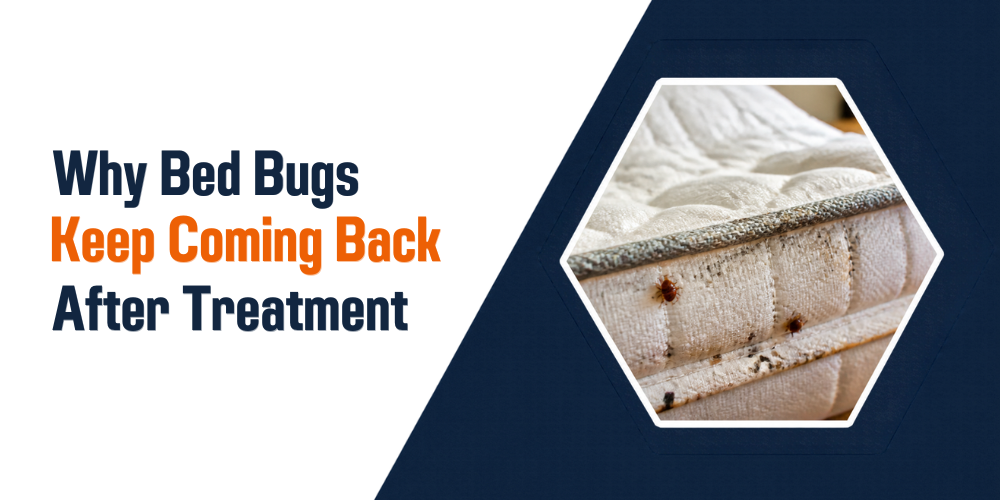
Bed bugs hide in mattress seams, bed frames, furniture joints, baseboards, and other narrow spaces.
According to the U.S. Environmental Protection Agency (n.d.-b), eliminating bed bugs requires a comprehensive approach because they can be difficult to locate and control.
If treatment fails to reach every affected hiding place, surviving insects may continue to feed and reproduce.
Bed Bug Eggs That Survive Treatment
Bed bug eggs are small and often concealed in protected crevices.
Some treatment methods may not reliably eliminate all eggs, particularly when products are ineffective against that life stage or cannot reach the eggs.
After hatching, surviving young bed bugs may create the impression that the original infestation has returned.
This is why treatment plans sometimes require follow-up inspections or additional applications.
Common Causes of Bed Bug Reinfestation
Bed bug reinfestation can occur when insects are reintroduced into a previously treated home. Identifying possible sources is important because even successful treatment cannot prevent every future introduction.
Travel and Infested Personal Belongings
Bed bugs can travel inside luggage, backpacks, clothing, and other belongings.
The Centers for Disease Control and Prevention (2024) explains that bed bugs spread by hiding in furniture, bedding, luggage, and personal items.
Travelers may unknowingly bring insects home after staying in an infested hotel, rental property, or other accommodation.
Inspecting luggage and belongings after traveling can help reduce the risk of introducing new bed bugs.
Secondhand Furniture and Shared Living Spaces
Used mattresses, couches, and upholstered chairs may contain hidden bed bugs.
Bringing these items indoors without inspection can introduce an infestation.
In apartments and other multiunit buildings, bed bugs may also move between neighboring units through structural openings or shared spaces.
When infestations involve multiple units, coordinated inspections and treatment may be necessary.
Treatment Mistakes That Allow Bed Bugs to Survive
Even when homeowners take immediate action, certain treatment mistakes can leave bed bugs behind. Effective control depends on choosing appropriate methods and following the recommended treatment process.
Relying Only on DIY Bed Bug Treatments
Over-the-counter sprays, household cleaners, and other DIY remedies may not reach insects concealed deep inside furniture or structural gaps.
Some products can kill exposed bed bugs but fail to eliminate an established infestation.
The EPA’s do-it-yourself bed bug control guidance (n.d.-a) emphasizes the importance of integrated pest management rather than relying on a single control method.
Homeowners should also avoid using outdoor pesticides indoors or applying products in ways that contradict their labels.
Skipping Follow-Up Inspections
A single treatment does not always guarantee complete elimination.
Follow-up inspections help determine whether live bed bugs remain, whether additional treatment is necessary, and whether new activity has appeared.
Homeowners should follow the pest control provider’s instructions and continue monitoring affected areas.
Ignoring follow-up recommendations may allow surviving insects to establish another infestation.
How Professional Bed Bug Extermination Prevents Recurring Infestations
Professional bed bug extermination focuses on identifying affected areas, selecting appropriate treatment methods, and monitoring results. A comprehensive approach can reduce the likelihood that hidden insects will survive.
Professional Heat Treatment and Targeted Applications
Professional treatment options may include controlled heat treatment, targeted insecticide applications, and integrated pest management.
Heat treatment uses specialized equipment to raise temperatures throughout affected spaces. Successful elimination requires lethal temperatures to reach the insects and remain effective for the necessary duration.
For homeowners dealing with recurring infestations, working with a Houston bed bug exterminator can help identify hidden activity and determine an appropriate treatment strategy.
A qualified professional can also explain preparation requirements and whether follow-up services are recommended.
Long-Term Bed Bug Prevention Strategies
Preventing another infestation requires consistent monitoring and careful handling of belongings.
Helpful practices include:
- Inspecting luggage after overnight travel
- Checking secondhand furniture before bringing it indoors
- Reducing clutter around sleeping areas
- Using bed bug-proof mattress encasements when appropriate
- Monitoring beds and nearby furniture for suspicious activity
- Following professional post-treatment instructions
These precautions cannot guarantee that bed bugs will never return, but they can reduce opportunities for unnoticed introductions.
Stop Recurring Bed Bug Infestations Before They Spread
When bed bugs keep coming back, the cause may involve incomplete treatment, surviving eggs, untreated hiding places, or new introductions from infested belongings.
Understanding the difference between treatment failure and bed bug reinfestation helps homeowners choose appropriate next steps.
Rather than repeatedly applying household remedies, focus on identifying the source of activity and following a comprehensive treatment plan.
With timely inspections, proper prevention practices, and professional bed bug extermination, homeowners can address persistent infestations and reduce the risk of another outbreak.
Read more: How Virtual Property Tours Are Transforming the Homebuying Experience

Jhon AJS, the creative mind behind Grammar Update, is an experienced blogger passionate about simplifying English grammar. He focuses on explaining confusing word vs word differences, grammar rules, punctuation, and sentence structure in a clear and practical way. Through easy to understand guides and examples, Jhon helps readers improve their writing and communicate with confidence. With years of blogging experience, he continues to share helpful insights that make learning grammar simple, useful, and accessible for everyone.