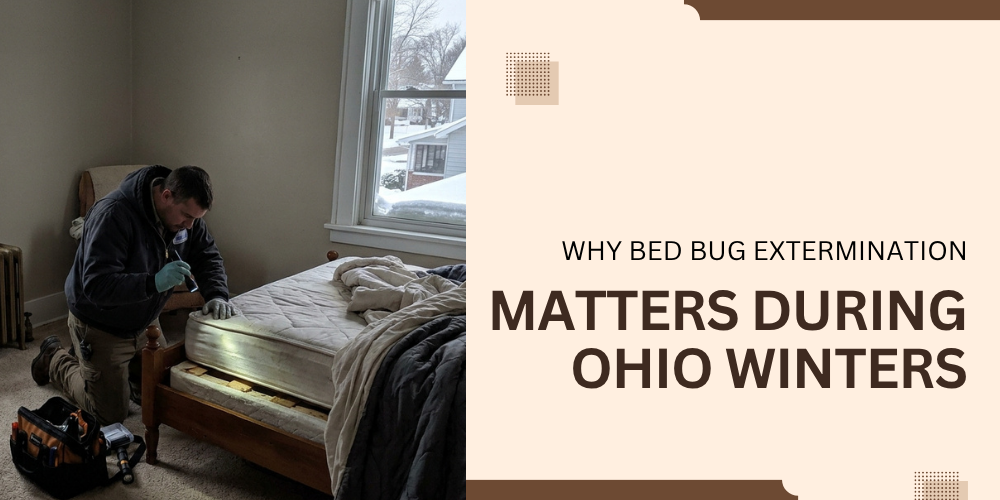
Freezing weather outside does not clear bed bugs from your home. Address signs of bed bugs promptly during winter to help control the infestation and prevent further spread. Heated rooms can support activity even while snow covers the ground.
However, booking bed bug extermination is only part of the process. You also need to understand when winter heat treatment is appropriate for your property and how bed bug monitoring helps you assess results.
Why Ohio’s Winter Weather Does Not Eliminate Bed Bugs
The temperature outside tells you little about conditions where bed bugs hide indoors. Your heating system keeps your rooms comfortable, but those conditions can also support bed bugs. Their ability to remain active indoors depends on factors such as the following:
- Heated rooms let bed bugs feed and reproduce. Therefore, bed bug extermination remains relevant even during freezing weather.
- In addition, mattress seams, bed frames, and furniture offer shelter. For this reason, bed bug monitoring should include these nearby hiding places.
- Normal room heating cannot kill an infestation. Instead, winter heat treatment requires specialized equipment and controlled exposure.
Putting a mattress or chair outside may seem like an easy winter solution. However, outdoor cold does not reliably reach and kill every hidden bug because of the following:
- Outdoor temperatures rise and fall, so bugs may survive when items fail to stay cold enough for long enough.
- Thick furniture can protect bugs from cold exposure.
Consequently, ask about winter heat treatment instead of assuming a snowy porch will clear your belongings.
Why Bed Bug Extermination Should Not Wait Until Spring
Winter weather does not give you a reliable reason to postpone treatment. A small problem can become harder to manage while you wait for a more convenient season. Therefore, putting off bed bug extermination until spring can result in the following:
- Bed bugs can continue reproducing indoors. That’s why delaying bed bug extermination may give them time to occupy more hiding places.
- Bugs can spread into other rooms or travel on belongings. Meanwhile, bed bug monitoring can help identify activity that needs professional attention.
- Over time, a larger infestation can require more work and expense. Therefore, early bed bug extermination may reduce the difficulty of addressing the problem.
If you notice potential signs of bed bugs, it’s important to act cautiously and systematically. Early detection and proper steps can save you time and money while preventing further spread. To get started, follow these suggestions:
- Document live bed bugs, dark spotting, or other evidence to confirm the infestation.
- Arrange for a professional inspection as soon as possible.
- Avoid moving potentially infested items between rooms or to another location, as this can cause the bed bugs to spread even further.
How Winter Heat Treatment Addresses Indoor Infestations
Heat treatment uses elevated temperatures to kill bed bugs in their hiding places. Professionals maintain consistent heat levels for enough time to ensure complete removal. During winter, take extra care to address cold spots or areas with insufficient insulation. Here’s how this approach works:
- Controlled heat penetrates mattresses, furniture, walls, and cracks, where bed bugs often hide.
- Technicians monitor hiding spots to ensure thorough treatment.
- Adjustments are made during cold weather to account for potential heat loss in poorly insulated areas.
Preparation helps you protect your belongings and plan for the time you will spend outside your home. Once you schedule a winter heat treatment, review your provider’s instructions and do the following:
- Remove heat-sensitive items that may be damaged during the process.
- Arrange a warm place for household members and pets to stay during service.
- Ask your exterminator whether additional treatment methods are necessary for your property, especially in cases of severe infestation.
Why Bed Bug Monitoring Matters After Winter Heat Treatment
Bed bug monitoring helps confirm whether all pests have been fully eradicated or if additional treatment is needed. It also allows you to take corrective action if new bugs are introduced. Monitoring involves steps like:
- Using interceptors under mattresses and furniture to detect remaining activity.
- Regularly check sleeping areas for signs of bed bugs.
- Promptly report any suspicious findings to your treatment provider.
You can make follow-up checks easier by keeping a consistent routine and recording what you find. To make bed bug monitoring useful throughout winter, focus on the following:
- Check recommended traps and sleeping areas weekly, following your provider’s directions.
- Record dates, locations, and photographs of new findings.
- Keep follow-up appointments even when activity seems to stop. Afterward, continue bed bug monitoring for the period your provider recommends.
Address Bed Bugs This Winter!
Ohio’s cold weather doesn’t stop bed bugs from thriving inside heated homes. Ignoring an infestation only gives it room to grow and spread, making it more difficult—and costly—to manage later. Prompt bed bug extermination, proper preparation for winter heat treatment, and consistent bed bug monitoring are your best tools for effective control.
Don’t wait until spring to take action! Contact a qualified bed bug control provider today for winter bed bug extermination and a personalized treatment plan tailored to your property. Protect your home—and your peace of mind—this winter season!
Read more: What Data Brokers Can Learn From Your App Activity

Jhon AJS, the creative mind behind Grammar Update, is an experienced blogger passionate about simplifying English grammar. He focuses on explaining confusing word vs word differences, grammar rules, punctuation, and sentence structure in a clear and practical way. Through easy to understand guides and examples, Jhon helps readers improve their writing and communicate with confidence. With years of blogging experience, he continues to share helpful insights that make learning grammar simple, useful, and accessible for everyone.