How Noblesville’s Climate Impacts Heat Pump Operation
Noblesville experiences a classic Midwestern climate, defined by significant seasonal swings. During the summer, high humidity levels force your heat pump to work overtime to dehumidify the air while cooling your living space. Conversely, our winters often dip well below freezing, requiring the system to extract heat from the outside air—a process that becomes increasingly difficult as temperatures drop.
When the mercury falls, heat pumps utilize a defrost cycle to prevent ice from building up on the outdoor coils. If this cycle is not functioning at peak performance, or if the system is struggling due to neglected maintenance, the unit may rely too heavily on auxiliary or emergency heat strips. This not only spikes your utility bills but also puts unnecessary strain on the compressor, the “heart” of your system. Understanding these climate-specific stressors is the first step toward appreciating why consistent heat pump maintenance is non-negotiable for local homeowners.
Why Seasonal Heat Pump Maintenance Matters in Central Indiana
Because our systems are expected to perform year-round—serving as both an air conditioner in July and a primary heater in January—they never get a true “off-season.” A spring tune-up ensures that your refrigerant levels are correct and your coils are clean, preparing the unit for the heavy cooling load ahead. A fall inspection is equally critical, as it confirms that the heating components and defrost sensors are ready to handle the onset of freezing temperatures. By scheduling these visits, you ensure that your system’s reliability remains high, regardless of what the Indiana weather forecast holds.
Essential Tasks Included in Professional Heat Pump Maintenance
Professional maintenance is far more than a simple cleaning; it is a comprehensive diagnostic process. A qualified technician will perform a series of technical evaluations to ensure every component is functioning within the manufacturer’s specifications.
Key tasks typically included in a professional service visit include:
- Refrigerant Charge Verification: Ensuring the refrigerant level is precise is vital, as both low and high levels can damage the compressor.
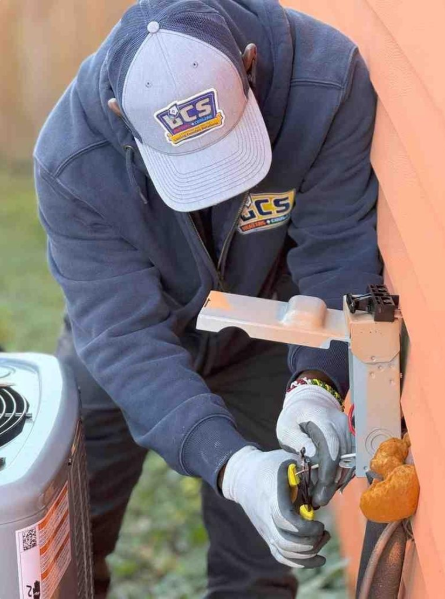
- Electrical Connection Tightening: Over time, the vibration of the unit can loosen electrical terminals, which can lead to arcing or system failure.
- Coil Cleaning: Removing dirt, pollen, and debris from the indoor and outdoor coils restores airflow and heat transfer efficiency.
- Blower Motor and Fan Inspection: Technicians check for balance and lubrication to prevent motor burnout.
- Thermostat Calibration: Ensuring the thermostat accurately communicates with the heat pump prevents short cycling and uneven temperatures.
For those seeking the best heat pump maintenance in Noblesville, IN, these professional steps are the foundation of a long-lasting, efficient system.
Professional vs. DIY Heat Pump Maintenance Tasks
While there are steps homeowners can take to keep their systems clean, the internal mechanics of a heat pump require professional expertise.
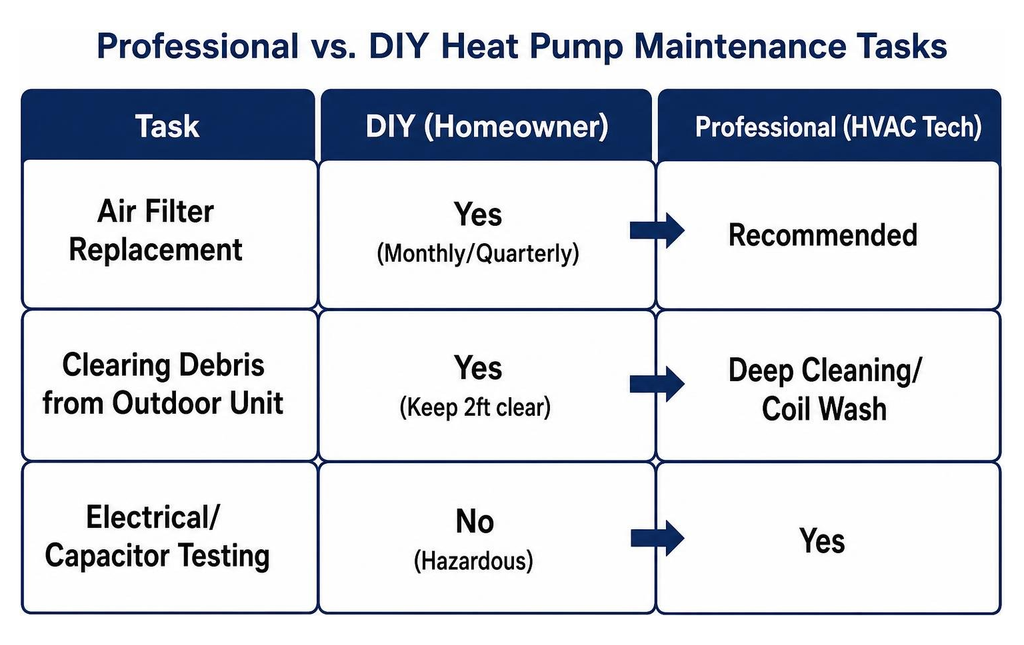
Task DIY (Homeowner) Professional (HVAC Tech) Air Filter Replacement Yes (Monthly/Quarterly) Recommended Clearing Debris from Outdoor Unit Yes (Keep 2ft clear) Deep Cleaning/Coil Wash Electrical/Capacitor Testing No (Hazardous) Yes Refrigerant Leak Detection No Yes Safety Control Testing No Yes Thermostat Calibration Minor Adjustments Precision Calibration
Financial and Operational Benefits of Regular Servicing
The most immediate benefit of regular maintenance is the reduction in energy consumption. A clean, well-calibrated system doesn’t have to work as hard to reach your desired indoor temperature. By maintaining optimal airflow and efficient heat transfer, you can significantly lower your monthly utility bills.
Beyond immediate savings, maintenance acts as an insurance policy for your equipment. The average lifespan of a heat pump is 10 to 15 years. However, this lifespan is heavily dependent on how well the unit is cared for. Neglected systems often suffer from “premature aging,” where components like the compressor or fan motors fail long before their expected end-of-life. By investing in routine care, you are essentially protecting your investment and delaying the high cost of a full system replacement. Furthermore, professional maintenance improves indoor air quality by ensuring that dust and allergens are not being recirculated through your home’s ductwork.
Warning Signs Your System Requires Service
Even with the best preventative care, mechanical systems can develop issues. Being aware of the “red flags” can help you call for help before a minor problem turns into a total system failure:
- Unusual Noises: Rattling, grinding, or squealing sounds often indicate loose parts or failing bearings.
- Short Cycling: If your system turns on and off frequently without completing a full cycle, it may be struggling with a refrigerant issue or a sensor malfunction.
- Weak Airflow: If the air coming from your vents feels sluggish, it may indicate a clogged filter, a blocked duct, or a failing blower motor.
- Ice Accumulation: While a light frost is normal during a defrost cycle, a thick buildup of ice on your outdoor unit is a sign that something is wrong.
- Rising Utility Bills: A sudden, unexplained increase in your energy costs is often the first sign that your heat pump is losing efficiency.
- Uneven Heating/Cooling: If some rooms are comfortable while others remain too hot or cold, your system may need balancing or a ductwork inspection.
Frequently Asked Questions About Heat Pump Care
How often should a heat pump be serviced in Noblesville?
Because our local climate demands so much from HVAC equipment, we recommend bi-annual service. A spring check-up prepares the system for cooling, while an autumn check-up ensures the heating components are ready for the winter. This schedule keeps your system in top shape for year-round operation.
What is the average lifespan of a well-maintained heat pump?
Most heat pumps are designed to last between 10 and 15 years. With consistent preventative maintenance, you can often reach or exceed the 15-year mark. Without it, you may find that your system starts losing its ability to deliver adequate cooling or heating power after just a decade.
What are the main risks of neglecting routine servicing?
Neglect is the leading cause of premature system failure. Risks include compressor burnout, frozen coils that can lead to water damage, and significantly higher utility bills due to lost efficiency. In extreme cases, a neglected system may fail during the coldest night of the year, leading to an emergency repair situation that could have been avoided.
Conclusion
Your heat pump is the backbone of your home’s comfort, working silently through the humid Noblesville summers and the biting winter frosts. By prioritizing professional heat pump maintenance, you aren’t just fixing a machine—you are ensuring the health and comfort of your home environment. Regular, professional tune-ups provide the peace of mind that comes with knowing your system is efficient, reliable, and ready for whatever the Indiana weather brings next. Don’t wait for a breakdown to give your system the attention it deserves; schedule your seasonal maintenance today to keep your home comfortable for years to come.
Read More: The Growing Popularity of At-Home Wellness and What Consumers Should Consider

Jhon AJS, the creative mind behind Grammar Update, is an experienced blogger passionate about simplifying English grammar. He focuses on explaining confusing word vs word differences, grammar rules, punctuation, and sentence structure in a clear and practical way. Through easy to understand guides and examples, Jhon helps readers improve their writing and communicate with confidence. With years of blogging experience, he continues to share helpful insights that make learning grammar simple, useful, and accessible for everyone.