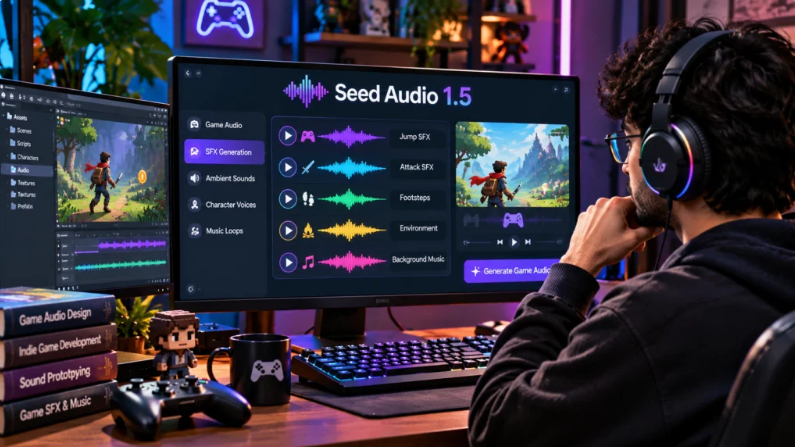
An independent game may have a distinctive visual style, an interesting world, and carefully designed gameplay, yet still feel unfinished if its sound does not match the experience. Audio helps players understand what is happening, notice important events, and connect emotionally with the world they are exploring.
For small development teams, however, building a complete sound identity can be challenging. Time, budget, and access to specialist audio professionals may all be limited. This makes early experimentation particularly valuable. Seed Audio 1.5 can be explored during the audio prototyping stage, helping developers investigate possible sound directions before committing to a finished soundtrack.
Why Sound Is Part of Game Design, Not Just Decoration
In a game, audio often communicates information that players may not consciously notice. A change in background ambience can suggest that a character has entered a new area. A short sound can confirm that an action has succeeded, while a sudden shift in atmosphere may indicate that the situation has become dangerous.
These details influence how players interpret the game world. Consider a puzzle game set in an abandoned observatory. A quiet mechanical atmosphere could suggest that the building still contains functioning equipment. If the same location suddenly becomes completely silent, players may suspect that something has changed. The sound is doing more than filling empty space. It is helping the player understand the environment.
Begin With the Game’s Identity
Before exploring individual sound effects, developers should decide what the game is supposed to feel like. A colorful platform game, a slow exploration adventure, and a tense survival experience need different audio personalities. A short creative brief can help establish that identity. It might describe:
- The emotional atmosphere of the game.
- The setting and its environmental characteristics.
- The pace of gameplay.
- The player’s relationship with the world.
- The role audio should play in communicating important events.
These decisions provide a foundation for later experiments. They also reduce the risk of collecting attractive sounds that do not belong together. For example, a peaceful exploration game may benefit from restrained environmental audio, while an arcade-style experience may require more immediate and energetic feedback. The sound should reflect the intended experience rather than follow trends simply because they are popular.
Three Audio Layers Developers Should Consider
A useful way to organize early experiments is to separate game audio into three broad categories.
Environmental atmosphere
This layer helps establish where the player is. It may include wind, distant activity, machinery, water, or other background details. The purpose is to make the setting feel consistent without demanding constant attention.
Interactive feedback
These sounds respond to player actions. Opening a door, collecting an item, activating a switch, or completing a task may each require a distinct audio response. Good feedback should be recognizable without becoming irritating through repetition.
Emotional direction
Some audio choices influence how a moment feels. A quiet passage may encourage curiosity, while a more intense atmosphere can build anticipation. These choices should support the game’s pacing rather than tell players exactly what to feel at every moment. Seed Audio 1.5 can be explored when developing concepts for these layers. Testing different directions early allows a team to decide which sounds deserve further refinement.
Prototyping Before the Game Is Finished
One advantage of early audio prototyping is that developers do not need a complete game to evaluate an idea. A simple playable scene, storyboard, or rough gameplay recording can provide enough context to explore sound possibilities. Imagine a small adventure game in which players discover an underground greenhouse. The development team could test several possible atmospheres: a quiet space with distant water, a more active environment with subtle mechanical sounds, or a mysterious setting with occasional unexplained details.
These experiments can reveal how audio changes the interpretation of the same visual scene. A visual concept created with Dreamina could help the team communicate the greenhouse’s intended appearance, while audio experiments help establish its atmosphere. The goal at this stage is not perfection. It is to identify a direction that fits the game before production becomes more expensive or difficult to change.
Designing Audio for Repetition
Games differ from films and many other media because players may repeat the same action dozens of times. A sound that feels exciting during its first appearance can become tiring after frequent use. Developers should therefore test audio in realistic gameplay conditions. A collection sound, for instance, may play every few seconds in a resource-gathering game. If it is too loud or overly detailed, it can become a source of irritation. Useful questions include:
- Does the sound remain comfortable after repeated playback?
- Can players distinguish it from other important cues?
- Does it communicate the action clearly?
- Does it become distracting during longer sessions?
Variation can help, but it should not make important feedback unpredictable. Players need to recognize familiar actions even when small details change.
Common Problems in Small-Team Audio Production
Independent developers sometimes try to solve every audio requirement at once. This can lead to inconsistent results, especially when different team members work on sounds without a shared direction. A written sound guide helps prevent this problem. It can record naming conventions, volume expectations, atmosphere references, and the intended purpose of each audio category.
Another challenge is relying too heavily on dramatic effects. Not every action needs a large sound or musical accent. Quiet moments give more prominent audio events room to matter. Teams should also consider licensing and usage rights before publishing a game. A sound that works well in a prototype is not automatically cleared for commercial release. Developers need to confirm that every asset is permitted for its intended use.
Testing With Players, Not Just Headphones
A sound may seem effective when reviewed by its creator but behave differently during actual gameplay. Players are concentrating on movement, objectives, and visual information, so they may notice different details. Testing with unfamiliar players can reveal whether important cues are understandable. Ask them what they heard when an event occurred, whether any sound felt repetitive, and whether the atmosphere matched the location.
It is also worth testing on different audio equipment. Headphones, laptop speakers, and television speakers can produce noticeably different results. A balanced experience should not depend on one particular listening setup.
Conclusion
Sound helps independent games communicate identity, atmosphere, and gameplay information. It can make locations feel distinctive, actions easier to understand, and repeated play more enjoyable. However, effective audio design begins with clear creative decisions rather than a large collection of effects. Seed Audio 1.5 can be part of the experimentation process, giving developers a way to explore sound concepts before final production. By organizing audio into purposeful layers, testing repetition, and gathering player feedback, small teams can create a more coherent listening experience without losing sight of the game’s central design.
Frequently Asked Questions
What is audio prototyping in game development?
Audio prototyping is the process of testing sound ideas before they become part of the finished game. It helps developers understand whether an audio direction suits the gameplay and atmosphere.
Can Seed Audio 1.5 help independent game developers explore sound ideas?
It can be explored as part of the creative process for developing audio concepts and evaluating different directions for a game’s sound identity.
Why should game sounds be tested repeatedly?
Players often perform the same actions many times. Repeated testing helps developers identify sounds that become annoying, distracting, or difficult to recognize over longer sessions.
Does every game action need its own sound effect?
No. Some actions can share a sound approach, while others may need distinct feedback. The priority is making important events understandable without overcrowding the audio experience.
What should developers check before using generated audio in a commercial game?
They should review the applicable usage terms, confirm commercial permissions, and check whether any additional licensing or attribution requirements apply.

Jhon AJS, the creative mind behind Grammar Update, is an experienced blogger passionate about simplifying English grammar. He focuses on explaining confusing word vs word differences, grammar rules, punctuation, and sentence structure in a clear and practical way. Through easy to understand guides and examples, Jhon helps readers improve their writing and communicate with confidence. With years of blogging experience, he continues to share helpful insights that make learning grammar simple, useful, and accessible for everyone.