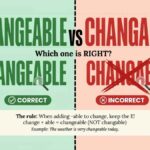
If you have ever hesitated between scarey vs scary, you are not alone, and honestly, English loves to play little tricks like this. One version looks believable while the other is actually correct, which is where most confusion starts. In real usage, people often mix them up while typing fast or relying on how the word sounds instead of how it’s spelled. This guide breaks down scarey vs scary in a clear, professional, and practical way so you understand not just the correct spelling, but also why it matters. You will also get an online practice test titled “Scary Spelling Master Challenge” to strengthen your understanding through active learning. By the end, you’ll confidently use the right form without second guessing yourself again.
Scarey vs Scary Meaning in Plain English
Start with the basics. When people search for “scarey vs scary meaning,” they usually want clarity on both spelling and definition.
The word “scary” describes something that causes fear, anxiety, or discomfort. It functions as an adjective, meaning it modifies a noun. You might describe a movie, situation, or experience as scary if it triggers a sense of fear.
The confusion arises because “scarey” looks like a logical extension of the base word “scare.” However, English doesn’t always build words the way we expect. While “scarey” may seem reasonable, it does not follow accepted spelling rules and is not recognized in standard dictionaries.
If you’re asking, “is it scary or scarey?”, the answer remains consistent across all forms of English: only “scary” is correct.
What Does Scary Mean? Definition, Context, and Usage
To use a word correctly, you need more than spelling. You need context. The scary definition goes beyond “something frightening.” It reflects a range of emotional reactions, from mild unease to intense fear.
According to widely accepted dictionary standards, including interpretations aligned with the scary Oxford dictionary meaning and scary Cambridge meaning, the word refers to anything that causes fear or alarm. This could be physical, emotional, or even psychological.
In everyday language, “scary” adapts easily. A child might call a loud thunderstorm scary. An adult might describe economic instability as scary. The word scales depending on the situation, which makes it both versatile and widely used.
When explaining scary meaning for kids, it becomes even simpler: something that makes you feel afraid. This straightforward definition helps younger learners grasp the concept without confusion.
The scary adjective meaning also highlights its grammatical role. It describes rather than acts. That distinction becomes important when comparing it to similar words later.
Is Scarey a Word? Breaking the Myth
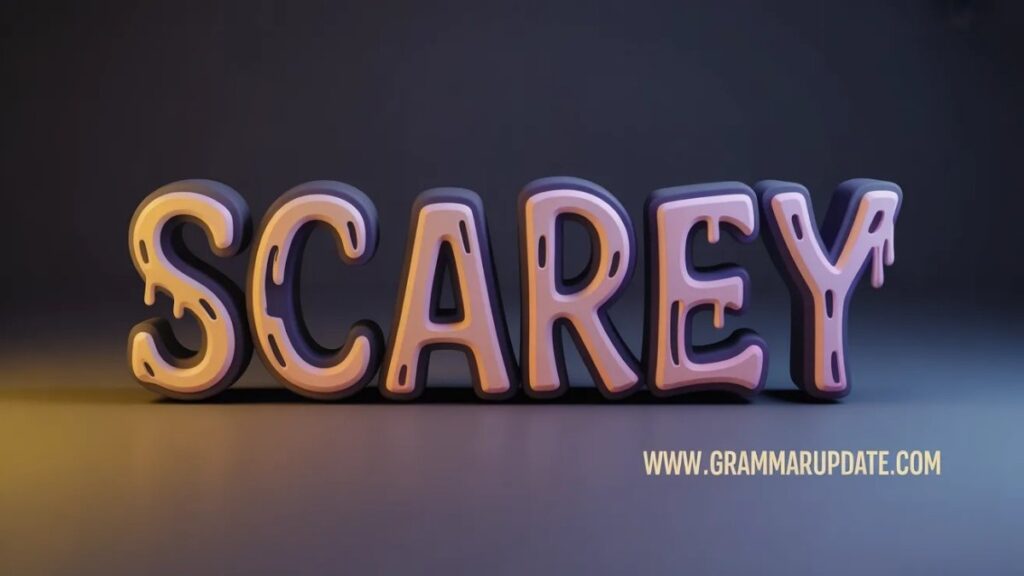
One of the most searched questions is “is scarey a word?” The answer is clear and consistent: no, it is not.
“Scarey” does not appear in recognized English dictionaries. It is not accepted in academic writing, professional communication, or standard grammar references. When it appears, it is classified as a scarey spelling mistake, not a variation.
This leads to another common question: “is scarey correct English?” Again, the answer is no. There is no dialect, regional version, or stylistic exception where “scarey” becomes correct.
Some assume it might be acceptable in informal contexts. While informal writing allows flexibility, spelling errors still reduce clarity and credibility. Even in casual communication, using the correct form “scary” strengthens your writing.
For those wondering about games or word validation, “scarey” is not accepted in official Scrabble dictionaries. That detail reinforces its status as an incorrect form rather than an alternative.
Learn the difference between tricky grammar words
Stared vs Starred How to Use Each Word Correctly
The Real Difference Explained
When comparing scarey vs scary, the distinction is not subtle. It is absolute.
“Scary” follows established English spelling conventions. It appears in dictionaries, literature, and everyday usage. It carries a clear meaning and grammatical role.
“Scarey,” in contrast, exists only as an error. It does not carry independent meaning, nor does it function as a recognized word. Its presence online reflects user behavior rather than linguistic acceptance.
The scarey vs scary difference can be summarized simply: one is correct and meaningful, while the other is incorrect and should be avoided.
Understanding this difference helps eliminate hesitation. Once you recognize that “scarey” has no valid standing, the choice becomes automatic.
The Grammar Behind the Correct Spelling of Scary
English spelling often feels inconsistent, but in this case, the rule is clear. The correct spelling of scary follows a common pattern used when forming adjectives.
When a word ends in a silent “e” and you add the suffix “y,” the “e” is typically removed. This pattern appears in several examples across the language.
Take the word “taste.” When it becomes an adjective, it turns into “tasty,” not “tastey.” Similarly, “noise” becomes “noisy,” not “noisey.” The same transformation applies to “scare,” resulting in “scary.”
This rule forms part of broader scary grammar rules that govern adjective formation. While English includes exceptions, this pattern is reliable enough to guide correct spelling in most cases.
Understanding this rule does more than solve one word. It strengthens your grasp of English spelling scary patterns overall.
How to Spell Scary Correctly Without Hesitation
If you’ve ever paused mid-sentence wondering how to spell scary, the solution lies in repetition and clarity.
Start with the base word “scare.” Remove the final “e.” Add the letter “y.” The result is “scary.” This step-by-step process removes guesswork and builds confidence.
A simple mental shortcut can also help. Think of the word as having no extra “e” once the suffix is added. This quick check works especially well when writing under pressure.
Over time, consistent use reinforces the correct form. What once required thought becomes automatic.
Learn the difference between tricky grammar words
Blankie vs Blanky Difference and Explained
Using Scary in Real Sentences and Everyday Language
Understanding usage brings the word to life. Scary example sentences show how naturally it fits into different contexts.
In casual conversation, someone might say that a horror movie is scary or that a sudden noise felt unsettling. These simple uses reflect everyday language.
In more formal contexts, the tone shifts slightly. A report might describe a trend as scary if it signals risk or concern. This flexibility allows the word to function across both informal and professional settings.
The phrase scary movie meaning often refers to films designed to evoke fear. These include horror, thriller, and psychological genres. The emotional response they trigger is what defines them as “scary.”
Learn the difference between tricky grammar words
Useable vs Usable Difference and Correct Usage
Scary vs Creepy vs Spooky
Although these words overlap, they are not interchangeable. Understanding the difference improves both clarity and precision.
“Scary” refers to something that directly causes fear. It is often intense and immediate. “Creepy” suggests discomfort or unease, often linked to something strange or unsettling. “Spooky” carries a lighter tone, usually associated with mystery or the supernatural.
The comparison scary vs creepy vs spooky highlights how subtle shifts in meaning can change the tone of a sentence. Choosing the right word depends on the emotional effect you want to create.
Learn the difference between tricky grammar words
Wise vs Wize Usage and Mistakes Explained
Expanding Vocabulary with a Scary Synonym List
Strong writing relies on variety. A well-developed scary synonym list allows you to avoid repetition and add depth.
Words similar to scary include frightening, terrifying, chilling, eerie, and haunting. Each carries a slightly different intensity. “Terrifying” suggests extreme fear, while “eerie” emphasizes atmosphere rather than direct threat.
When people ask, “what is another word for scary?”, they are often looking for these nuances. Selecting the right synonym can sharpen your message and make your writing more engaging.
Scary vs Frightened Difference
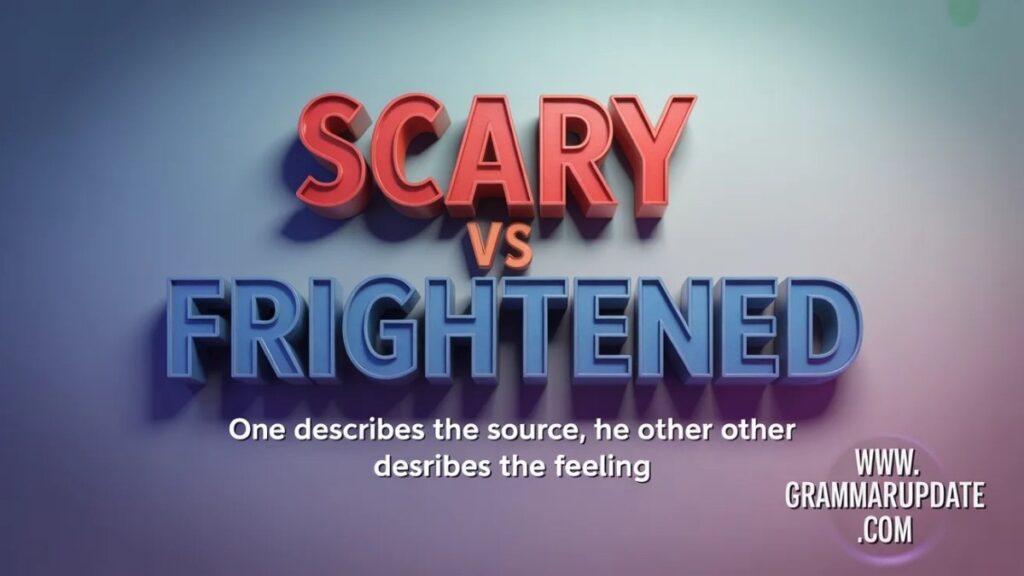
A subtle but important distinction exists between “scary” and “frightened.” The former describes the source of fear, while the latter describes the person experiencing it.
For example, a dark forest may be scary, but a person walking through it may feel frightened. This difference helps maintain clarity in communication and prevents awkward phrasing.
The comparison scary vs frightened difference highlights the importance of understanding grammatical roles, not just meanings.
Learn the difference between tricky grammar words
Perfer vs Prefer Usage and Common Mistakes
Related Word Confusions You Should Avoid
English contains many similar-sounding words that lead to confusion. Some people mix up “scary” with unrelated terms like “scarce” or incorrect forms like “scardy.”
“Scarce” refers to something limited or rare, not something that causes fear. “Scardy” and “scaredly” are not standard English forms and should be avoided.
These misunderstandings often appear in searches such as “what is scardy meaning” or “does scarce mean scary.” Recognizing the differences prevents errors and improves overall language accuracy.
Learn the difference between tricky grammar words
Trek vs Treck Confusion and Correct Usage
Why “Scarey” Still Appears in Searches and Content
Despite being incorrect, “scarey” continues to appear online. This persistence reflects how people interact with language rather than how language is defined.
Many users type words based on sound rather than spelling rules. Search engines recognize this behavior and treat “scarey” as a variation of “scary.” This allows users to find relevant results even when their spelling is incorrect.
From an SEO perspective, acknowledging this variation can help capture traffic. However, maintaining correct usage in content remains essential for credibility and clarity.
English Practice Session
This practice set helps you understand the correct spelling and usage of “scary”. The word “scarey” is a common mistake and not accepted in standard English.
Multiple Choice Questions
- The correct spelling is
a) Scarey
b) Scary - Which form is standard English?
a) Scarey
b) Scary - Horror films are usually described as
a) Scary
b) Scarey - The correct adjective for fear is
a) Scarey
b) Scary - Choose the correct sentence
a) A scary story
b) A scarey story - Which spelling is found in dictionaries?
a) Scarey
b) Scary - “Scary” means something that is
a) Frightening
b) Funny - Select the correct phrase
a) Scary experience
b) Scarey experience - Which is correct English usage?
a) Scary night
b) Scarey night - The correct spelling is
a) Scarey
b) Scary
Fill in the Blanks
- The movie was very ______ and made everyone nervous.
- The dark alley looked extremely ______ at night.
- The sudden noise felt ______ in the silence.
- The abandoned house is ______ to enter.
- This situation is very ______ for beginners.
- The correct spelling of the word is ______.
- A ______ experience can make people alert.
- The forest becomes ______ after sunset.
- The correct adjective form is ______, not scarey.
- Many people find horror movies ______ but exciting.
- The haunted place was ______ for visitors.
- Loud thunder can be ______ for children.
- The story was so ______ that I could not sleep.
- Dark shadows often look ______ at night.
- The correct English spelling is always ______.
Answers
Multiple Choice Answers
1-b, 2-b, 3-a, 4-b, 5-a, 6-b, 7-a, 8-a, 9-a, 10-b
Fill in the Blanks Answers
11 scary
12 scary
13 scary
14 scary
15 scary
16 scary
17 scary
18 scary
19 scary
20 scary
21 scary
22 scary
23 scary
24 scary
25 scary
Here’s a trusted source for clear word meanings:
FAQs
Is it spelled scary or scarey?
“Scary” is the correct spelling in standard English. “Scarey” is considered incorrect and is commonly treated as a spelling mistake in formal writing.
What is the meaning of the word scarey?
“Scarey” does not have an official meaning in English dictionaries. It is generally a misspelling of “scary,” which is the correct word used to describe something that causes fear or nervousness.
Does scary have an E in it?
“Scary” does not include an “e” after “scar.” The word is formed by dropping the final “e” from “scare” and adding “y,” which is why the correct spelling is “scary.”
What is the correct way to spell “scary”?
The correct spelling is “scary.” It follows a standard English spelling pattern where the final “e” in the base word is removed before adding “y” to form an adjective.
What is the full meaning of scarce?
“Scarce” means something that is limited in quantity, not easily available, or rare. It is used to describe resources or items that exist in small amounts compared to demand.
What is a fancy way to say “scary”?
More expressive alternatives include terrifying, horrifying, spine-chilling, eerie, and frightening. These words are often used to describe stronger emotional intensity or atmosphere.
Is “scaredly” a real word?
“Scaredly” is not recognized as a correct English word. Instead, standard English uses “scared” or alternative adverbs like “fearfully” depending on sentence structure.
What is scardy?
“Scardy” is not a valid English word. The correct form is “scared,” which describes the feeling of fear or being frightened.
Does “scarce” mean “scary”?
“Scarce” and “scary” are completely different words. “Scarce” refers to something limited or rare, while “scary” describes something that causes fear.
What is another word for scarce?
Synonyms for “scarce” include rare, limited, insufficient, uncommon, and hard to find. Each expresses the idea of low availability.
Final Thoughts
To finish things off, the confusion around scarey vs scary is one of those small but sneaky English mistakes that can make even confident writers pause for a second. It might look like both versions could be right, but in standard English, only “scary” is correct, while “scarey” is just a common spelling slip.
The good news is that once you see the rule, it sticks. English simply drops the “e” from “scare” before adding “y,” and that’s it no hidden tricks, no secret exceptions. So the next time your keyboard tries to sneak in that extra letter, you’ll know better. Keep it simple, trust the rule, and let “scary” carry the meaning without any confusion tagging along.

Jhon AJS, the creative mind behind Grammar Update, is an experienced blogger passionate about simplifying English grammar. He focuses on explaining confusing word vs word differences, grammar rules, punctuation, and sentence structure in a clear and practical way. Through easy to understand guides and examples, Jhon helps readers improve their writing and communicate with confidence. With years of blogging experience, he continues to share helpful insights that make learning grammar simple, useful, and accessible for everyone.