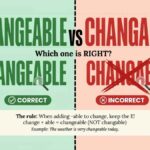
Confusion between perfer vs prefer is a small but surprisingly common writing mistake, especially when words are typed quickly or without careful proofreading. At first glance, both forms look almost identical, which is exactly why the error slips through so easily. However, only one is correct in English usage. Prefer is the proper spelling used in grammar, communication, and formal writing, while perfer is simply a misspelling caused by switched letters. This guide explains perfer vs prefer in a clear, professional way so you can quickly identify the mistake, understand why it happens, and consistently use the correct form without uncertainty.
Perfer vs Prefer Which One Is Correct?
Let’s resolve the confusion immediately.
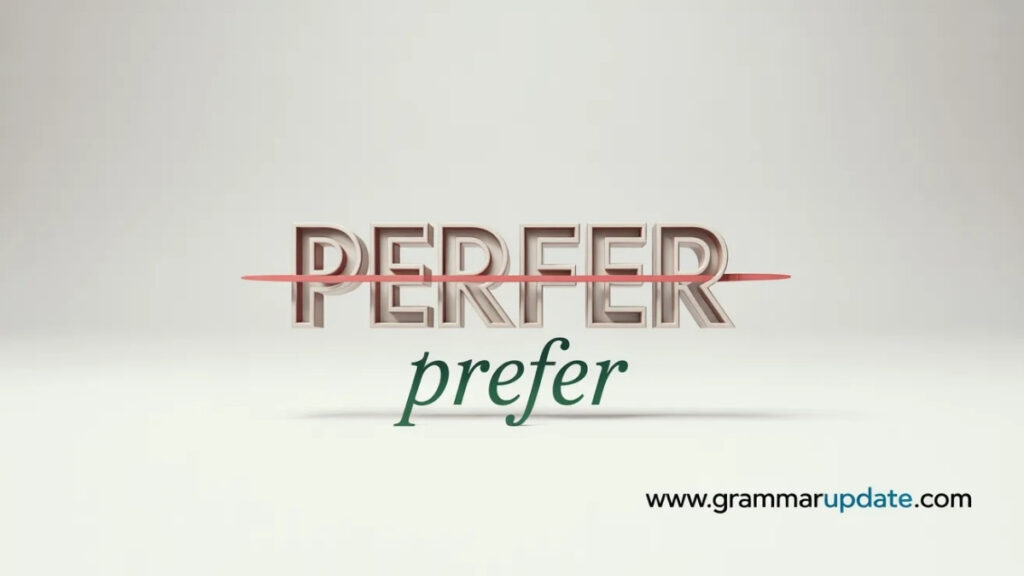
- “Prefer” is the correct and only accepted spelling in English, while “perfer” is a misspelling with no meaning or grammatical role.
There is no regional variation, no stylistic exception, and no context where “perfer” becomes acceptable. It is simply an error.
Many writers hesitate because both versions look plausible. However, once you fix the correct pattern in your mind, the hesitation disappears.
Example:
“I prefer structured communication because it improves clarity.”
Why “Perfer” Is a Common Mistake
Understanding the cause helps you eliminate the mistake permanently.
- “Perfer” occurs due to letter transposition, where the brain recognizes the word but the fingers reverse internal letters during typing.
This happens more often under pressure or speed. The brain processes words as shapes rather than exact letter sequences. As a result, familiar words become vulnerable to small distortions.
Interestingly, this type of error appears more frequently in common words than rare ones. Familiarity breeds speed, and speed invites mistakes.
Example:
Typing “perfer” in a fast email without noticing the reversed letters.
Prefer Meaning Clear and Practical Explanation
To use the word correctly, you need a solid understanding of the prefer meaning.
- “Prefer” means to choose one option over another or to like something better in comparison.
This definition highlights an important idea—comparison. Even when the second option isn’t explicitly mentioned, it is implied.
From a grammatical perspective, prefer functions as a verb that expresses decision-making or personal inclination.
Example:
“She prefers quiet environments for focused work.”
Prefer vs Like Key Differences Explained
Although these words seem similar, they serve distinct purposes.
- “Prefer” expresses comparison between two or more options, while “like” expresses general enjoyment without comparison.
Using the correct word improves precision and avoids ambiguity in your message.
Think of like as broad and prefer as selective.
Example:
“I like both options, but I prefer the simpler one.”
How to Use Prefer in a Sentence
Correct usage depends on mastering sentence structure.
- “Prefer” follows structured patterns such as noun-to-noun comparisons, verb-ing forms, or infinitive constructions.
These patterns ensure your sentences sound natural and grammatically correct. Inconsistent structures often lead to awkward phrasing.
Example:
“I prefer working in the morning to working late at night.”
Prefer Grammar Rules You Should Know
Grammar rules for prefer are simple but essential.
- Always use “to” when comparing options and avoid incorrect constructions such as “prefer than.”
This single rule eliminates most usage errors. Consistency in structure further strengthens clarity.
Example:
“I prefer tea to coffee.”
Prefer Verb Forms (Preferred, Preferring)
To use the word across different contexts, you need to understand its forms.
- “Prefer” doubles the final “r” when adding suffixes like “-ed” or “-ing” due to standard English spelling rules.
This follows the pattern of short vowel + consonant → double the consonant.
Example:
“They preferred the updated version.”
Prefer Pronunciation US and UK Guide
Correct pronunciation enhances spoken communication.
- The standard prefer pronunciation is /prɪˈfɜːr/, with stress placed on the second syllable.
Both American and British English follow this stress pattern, although vowel sounds may vary slightly.
Example:
Pronounce it as: “pri-FUR”
Examples of Prefer in a Sentence
Practical examples reinforce understanding and improve retention.
- Using “prefer” in real-life contexts demonstrates how it naturally expresses comparison and choice.
These examples reflect everyday communication, making them easier to apply.
Example:
“Do you prefer online meetings or in-person discussions?”
Learn the difference between confusing English words
Skiid vs Skied Difference and Usage
Common Spelling Mistakes with Prefer
Even experienced writers make spelling errors.
- Common mistakes include “perfer,” “preffer,” and “prefere,” all of which are incorrect.
Recognizing these variations helps you identify and correct them quickly.
Example:
Incorrect: “I perfer clear instructions.”
Correct: “I prefer clear instructions.”
Prefer vs Perfer Difference Detailed Comparison
A structured comparison removes all ambiguity.
- “Prefer” is a valid English verb with clear meaning and usage, while “perfer” is an invalid spelling with no linguistic value.
Below is a detailed table comparing both forms.
| Feature | Prefer | Perfer |
|---|---|---|
| Valid English word | Yes | No |
| Meaning | Choose one thing over another | None |
| Grammar usage | Used as a verb | Not applicable |
| Dictionary presence | Included in all dictionaries | Not listed |
| Professional writing | Acceptable | Incorrect |
| Common usage | Widely used globally | Never used correctly |
Example:
“I prefer clarity over complexity in communication.”
Learn the difference between similar English words
Inexcusable vs Unexcusable Difference and Usage
Prefer Synonym Expanding Vocabulary with Precision
Using synonyms adds variety but requires careful selection.
- Common synonyms for prefer include choose, favor, select, and like better than, each with subtle differences in tone.
Not all synonyms are interchangeable in every context. Choosing the right one depends on intent and formality.
Example:
“I favor structured approaches over unplanned methods.”
Prefer Word Origin Historical Insight
Knowing the origin adds depth to your understanding.
- The word “prefer” originates from the Latin praeferre, meaning “to place before” or prioritize.
This original meaning aligns perfectly with modern usage, where one option is placed above another.
Example:
“I prefer efficiency over unnecessary detail.”
Learn the difference between similar English words
Symptomatology vs Symptomology Differences and Usage
Prefer in Spanish and Other Languages
Language comparisons highlight consistency across cultures.
- The translation of prefer in Spanish is “preferir,” which shares the same root and meaning.
This similarity makes it easier for multilingual learners to understand and remember.
Example:
Spanish: “Prefiero café.”
English: “I prefer coffee.”
Prefer Meaning in Urdu and Hindi
Understanding translations strengthens comprehension.
- In Urdu and Hindi, “prefer” conveys the idea of giving priority or choosing one option over another.
This consistent meaning reflects the universal concept of preference.
Learn the difference between confusing word pairs
Parents’ vs Parent’s Differences and Correct Usage
Prefer vs Would Rather Key Distinction
Advanced learners benefit from understanding this comparison.
- “Prefer” expresses general preference, while “would rather” refers to specific or immediate choices.
Choosing between them depends on context and intent.
Example:
“I would rather stay home tonight.”
How to Spell Prefer Correctly
Spelling accuracy builds credibility.
- The correct spelling follows a simple structure: “pre” + “fer,” without additional letters or rearrangement.
Practicing this pattern helps eliminate hesitation.
Example:
Write: “prefer” slowly until it becomes automatic.
Learn the difference between confusing word pairs
Worshipped vs Worshiped Difference and Usage
Common Mistakes with Prefer Usage

Even when spelled correctly, usage errors can occur.
- Mistakes often involve incorrect prepositions, inconsistent structures, or unnecessary redundancy.
Awareness and practice help eliminate these issues.
Example:
Incorrect: “I prefer coffee than tea.”
Correct: “I prefer coffee to tea.”
Learn the difference between confusing word pairs
Laser vs Lazer know the Difference
Comprehensive Table Prefer Grammar and Usage Rules
| Category | Correct Usage | Incorrect Usage | Explanation |
|---|---|---|---|
| Spelling | prefer | perfer | Only “prefer” is valid |
| Comparison | prefer tea to coffee | prefer tea than coffee | “To” is required |
| Verb form | preferred | prefered | Double “r” rule applies |
| Structure | prefer reading to watching | prefer to reading | Maintain parallel structure |
| Pronunciation | pri-FUR | PRE-fer | Stress second syllable |
| Synonym usage | favor, choose | random substitution | Context matters |
Example:
“I prefer detailed explanations because they improve understanding.”
Finaly vs Finally Differences and Usage
Practice Section
This section is designed to reinforce correct usage of prefer through structured practice. Focus on accuracy, grammar patterns, and natural sentence formation. Work through each exercise carefully and check your understanding as you go.
Fill in the Blanks
- Complete each sentence using the correct form of “prefer.”
- I ______ tea to coffee in the morning.
- She ______ reading books to watching TV.
- They ______ traveling by train instead of flying.
- He ______ working at night over working during the day.
- We ______ quiet environments over noisy ones.
- Do you ______ summer or winter?
- I ______ to stay home on weekends.
- She ______ chocolate over vanilla.
- They ______ studying alone rather than in groups.
- He ______ clear instructions over unclear ones.
Error Correction
- Identify and correct the grammatical or spelling error in each sentence.
- I perfer tea than coffee.
- She prefer to reading books.
- They prefers traveling by car.
- He prefer coffee over than tea.
- We perfer quiet places.
Sentence Transformation
- Rewrite each sentence using correct “prefer” structures while maintaining meaning.
- I like tea more than coffee.
- She enjoys reading more than watching TV.
- They choose traveling by train over flying.
- He likes working at night more than during the day.
- We like small gatherings more than large events.
Structure Recognition Practice
- Identify whether the sentence follows correct “prefer” grammar rules.
- Prefer + noun + to + noun structure
- Prefer + verb-ing + to + verb-ing structure
- Incorrect use of “than” in comparison
- Incorrect spelling of “prefer”
- Correct use of infinitive structure with “to prefer to”
Usage Accuracy Check
- Determine whether each sentence correctly applies standard English usage rules.
- Proper use of “prefer” in comparative structure
- Incorrect substitution of “perfer”
- Missing preposition in comparison
- Incorrect verb agreement with “prefer”
- Proper infinitive usage after “prefer”
Review Focus
Pay attention to the following key areas while practicing:
- Correct spelling: prefer, not perfer
- Proper comparison structure using “to”
- Consistent verb agreement
- Correct use of verb forms (prefer, preferred, preferring)
- Avoiding common structural errors in comparisons
Here’s a trusted source for clear word meanings:
FAQs
Which is correct, prefer or perfer?
The correct spelling is prefer. “Perfer” is just a spelling mistake and is not used in English.
Why do you double the R in “preferred”?
The “r” is doubled because of English spelling rules tied to stress and vowel patterns. It becomes preferred and preferring, not prefered.
Is it correct to say prefer?
Yes, “prefer” is correct. It is used to show you like one thing more than another.
What is the rule of prefer?
“Prefer” is used for comparison and is usually followed by “to”, not “than.”
What is the meaning of perfer?
“Perfer” has no meaning. It is only a misspelling of “prefer.”
Is it correct to say I prefer tea to coffee?
Yes, it is correct and follows standard English grammar.
How do I use prefer in a sentence?
Use it to show choice or liking one thing more than another.
What to say instead of prefer?
You can use words like choose, favor, or like better.
Is “I would prefer” grammatically correct?
Yes, it is correct and often used for polite or formal expression.
Final Thoughts
Confusion around perfer vs prefer is a common but completely avoidable spelling mistake that often appears in fast or unedited writing. It usually happens when letters are swapped unintentionally, making the incorrect form look deceptively familiar at first glance.
The correct spelling is always prefer. The term perfer has no accepted meaning in English and is not recognized in standard grammar or dictionaries. It is simply a misspelling that slips in due to typing speed or lack of attention to letter order.
The takeaway is clear: once you remember the correct structure of the word, the error becomes easy to spot and eliminate. With a little awareness, your writing immediately becomes more accurate, polished, and professional.

Jhon AJS, the creative mind behind Grammar Update, is an experienced blogger passionate about simplifying English grammar. He focuses on explaining confusing word vs word differences, grammar rules, punctuation, and sentence structure in a clear and practical way. Through easy to understand guides and examples, Jhon helps readers improve their writing and communicate with confidence. With years of blogging experience, he continues to share helpful insights that make learning grammar simple, useful, and accessible for everyone.