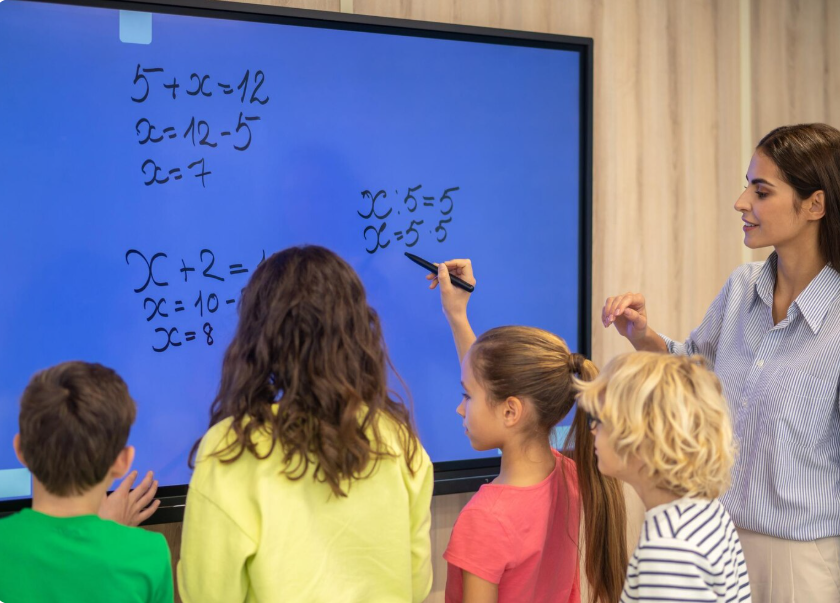
Primary 4 is an important stage in Singapore’s mathematics curriculum, as pupils encounter more demanding questions that require logical thinking, careful interpretation and the application of different mathematical concepts. Although basic calculations remain essential, assessments increasingly test whether children can recognise relationships, organise information and select suitable methods to reach an answer. Heuristics and non-routine problem-solving questions therefore become significant parts of mathematical learning.
For many children, the difficulty is not necessarily performing calculations but deciding how to approach an unfamiliar question. Developing these abilities requires regular practice, conceptual understanding and opportunities to explore different solutions. Primary maths tuition can provide additional guidance by helping pupils understand problem-solving strategies, identify common question patterns and develop confidence when tackling questions beyond routine textbook exercises.
1. Understanding Heuristics in Primary 4 Mathematics
Heuristics are problem-solving strategies that help pupils approach questions when an immediate calculation method is not obvious. Rather than relying on memorised procedures, children learn to examine the available information, identify relationships and choose an appropriate approach.
In Singapore’s Primary 4 mathematics syllabus, these strategies are particularly useful for questions involving several steps, unfamiliar situations and different mathematical concepts.
Common heuristics include:
- Drawing a model: Using bar models or diagrams to represent quantities and relationships clearly.
- Looking for a pattern: Identifying repeated sequences or numerical relationships to determine missing values.
- Working backwards: Starting with the final information and reversing the operations to discover an earlier value.
- Making a systematic list: Organising possible answers to avoid overlooking important combinations.
- Guess and check: Testing possible solutions and adjusting them according to the conditions given.
- Simplifying the problem: Breaking a complicated question into smaller, manageable parts.
Children should understand that these strategies are tools rather than fixed rules. A bar model may work well for a comparison question, while working backwards may be more suitable when the final result and sequence of operations are provided.
2. What Makes Non-Routine Questions Different?
Routine questions generally follow familiar formats. Pupils recognise the operation required and apply a method they have previously practised. Non-routine questions, however, often present information in less predictable ways.
For example, a routine question might ask pupils to calculate the total cost of several identical items. A non-routine version could provide a total amount, a difference in the number of items purchased and an additional condition that must be considered before calculating the answer.
These questions assess several abilities:
- Interpreting information: Understanding what the question provides and what needs to be found.
- Recognising relationships: Identifying connections between quantities rather than treating every number separately.
- Selecting strategies: Deciding whether a model, pattern, systematic listing or another method is appropriate.
- Checking solutions: Ensuring the final answer satisfies every condition in the question.
For Primary 4 pupils, regular exposure to unfamiliar question formats helps reduce hesitation and encourages independent thinking.
3. Common Problem-Solving Question Types in Primary 4
Understanding the different forms of non-routine questions can help parents recognise where their children may need additional practice.
| Question type | Skills involved | Suitable approach |
| Number patterns | Recognising sequences and relationships | Look for a pattern |
| Comparison problems | Understanding differences between quantities | Draw a bar model |
| Multi-step word problems | Combining mathematical operations | Break the question into stages |
| Missing-number questions | Understanding inverse operations | Work backwards |
| Combination problems | Exploring possible arrangements | Make a systematic list |
For instance, consider a question in which two children have 48 stickers altogether. One child has 12 more stickers than the other. Instead of guessing the quantities, pupils can draw a bar model to represent the total and the difference.
By removing the extra 12 stickers from the combined amount, they can divide the remaining 36 stickers equally. The children therefore have 18 and 30 stickers respectively.
This example demonstrates how a visual representation can make an unfamiliar problem easier to understand.
4. Why Students Struggle with Heuristics and Unfamiliar Questions
Some pupils find unfamiliar mathematics questions difficult because of the following reasons:
- Weak conceptual understanding: Memorising methods without understanding them makes new questions harder.
- Difficulty identifying information: Long word problems can confuse pupils.
- Overusing familiar methods: Students may struggle to choose the most suitable approach.
- Poor explanation skills: Unclear working makes it difficult to show their reasoning.
Addressing these difficulties early helps children develop stronger problem-solving skills and confidence.
5. Practical Ways to Improve Non-Routine Problem-Solving Skills
Parents can develop children’s mathematical reasoning through simple activities at home.
- Read carefully: Identify key information before calculating.
- Use diagrams: Try bar models, tables and simple drawings.
- Explore methods: Encourage different ways to solve problems.
- Practise varied questions: Include unfamiliar and multi-step problems.
- Review mistakes: Help children understand errors and improve their approach.
Parents should appreciate effort and logical thinking, not just correct answers. This builds confidence and stronger problem-solving skills.
6. How Additional Mathematics Support Can Help
Structured guidance can help children understand problem-solving methods and overcome learning gaps.
A suitable programme can help pupils:
- Understand different heuristics and their uses.
- Solve word problems accurately.
- Organise mathematical working.
- Recognise number relationships.
- Build confidence through regular practice.
Mavis Tutorial Centre provides structured explanations and guided exercises to help pupils strengthen their mathematical understanding and problem-solving skills.
7. Preparing Effectively for Primary 4 Maths Assessments
Assessment preparation should involve more than completing repeated worksheets. Pupils need a balanced approach that combines mathematical knowledge, strategy selection and careful checking.
A practical weekly routine could include reviewing one mathematical concept, practising several routine questions and attempting a small number of non-routine problems. Children should also revisit mistakes to understand whether the difficulty involved calculation accuracy, question interpretation or choosing an unsuitable heuristic.
Timed practice can be introduced gradually once pupils understand the relevant methods. However, speed should not become the main priority. Accuracy, logical reasoning and clear working are more valuable foundations for tackling unfamiliar questions.
Final Thoughts
Primary 4 mathematics assessments develop children’s reasoning, analytical thinking and ability to solve unfamiliar problems. Understanding heuristics helps pupils approach questions confidently, recognise numerical relationships and select suitable strategies. Regular practice also strengthens the mathematical foundations needed for upper primary learning.
Parents can support progress by encouraging independent thinking, reviewing mistakes and practising different question formats. For children requiring additional guidance, Mavis Tutorial Centre offers supplementary learning support to strengthen mathematical understanding. Parents exploring suitable learning opportunities can visit mavistutorial.com to learn more. With consistent effort and structured guidance, pupils can build confidence and improve their problem-solving abilities.
Frequently Asked Questions
1. What are heuristics in Primary 4 mathematics?
Heuristics are strategies that help pupils solve mathematical problems when the correct method is not immediately obvious. Examples include drawing models, identifying patterns, working backwards and making systematic lists. These approaches encourage logical thinking instead of depending entirely on memorised calculations.
2. Why are non-routine questions important in Primary 4 assessments?
Non-routine questions test whether pupils can apply mathematical knowledge in unfamiliar situations. They require children to interpret information, recognise relationships and select appropriate strategies. Regular practice helps develop flexible thinking and prepares pupils for more challenging upper primary mathematics.
3. How can parents help children improve their problem-solving abilities?
Parents can encourage children to explain their thinking before attempting calculations. Practising word problems, drawing diagrams and discussing alternative solutions can strengthen understanding. Reviewing mistakes together also helps children recognise which parts of their reasoning need improvement.
4. Should Primary 4 pupils practise non-routine questions every day?
Short and consistent practice can be beneficial, although children do not need to complete difficult questions every day. A balanced routine should include concept revision, routine calculations and selected problem-solving exercises. This allows pupils to develop their skills without feeling overwhelmed.
5. Can primary maths tuition improve performance in mathematics assessments?
Structured additional lessons can help pupils address learning gaps and understand how different heuristics are applied. Guided practice also provides opportunities to work through unfamiliar questions and improve mathematical reasoning. However, progress depends on consistent effort, active participation and regular revision.
Read More: How Personalized Learning Is Changing the Future of Education

Jhon AJS, the creative mind behind Grammar Update, is an experienced blogger passionate about simplifying English grammar. He focuses on explaining confusing word vs word differences, grammar rules, punctuation, and sentence structure in a clear and practical way. Through easy to understand guides and examples, Jhon helps readers improve their writing and communicate with confidence. With years of blogging experience, he continues to share helpful insights that make learning grammar simple, useful, and accessible for everyone.