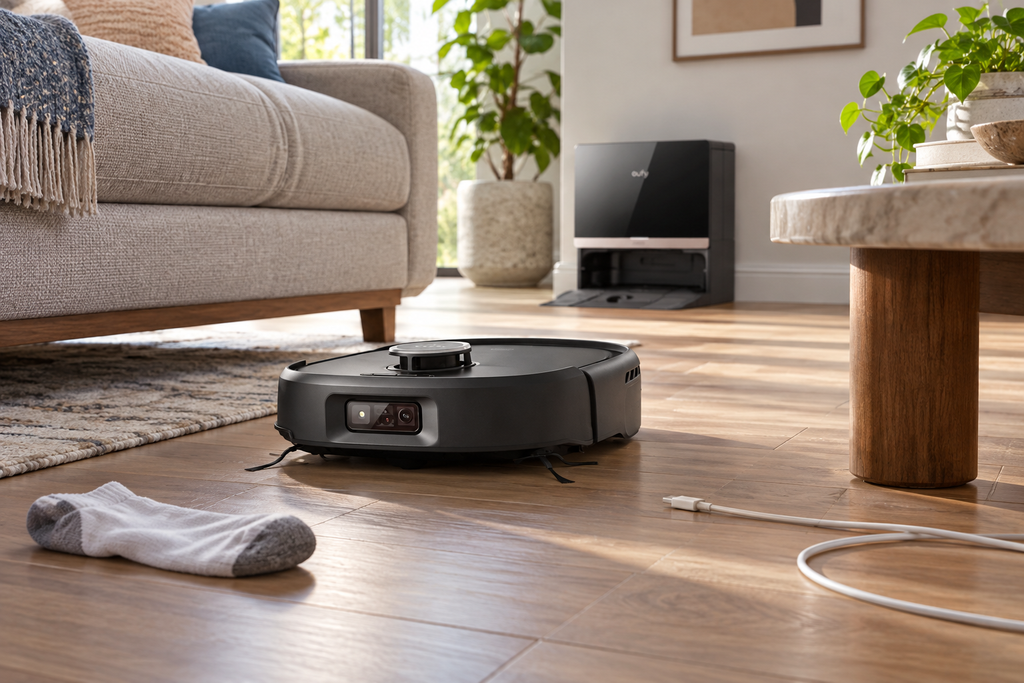
LiDAR maps room geometry, while a front camera can help detect small objects below the laser’s scan plane. A robot vacuum may follow a neat route through the living room after dinner and still get caught on a charging cable beside the sofa. The map can be accurate while the floor is not. Navigation and object detection solve different problems, so this guide explains what LiDAR reads, what it may overlook near the floor, and how to judge whether a camera belongs in the navigation setup.
How Does LiDAR Map a Room?
LiDAR stands for light detection and ranging. On many robot vacuums, a small turret on top sends laser pulses around the room and measures how long the reflected light takes to return. Those distance readings help the robot estimate the positions of walls, furniture, and open passages. As the turret rotates and the robot moves, the software combines many measurements into a floor plan.
The process is closer to taking repeated distance measurements than taking a photograph. A laser scan does not need a recognizable image of the sofa or dining table. It needs a reflection that can be converted into distance and location.
The map then supports route planning. Instead of wandering until the battery runs low, the robot can divide the available floor into sections, follow more consistent passes, and keep track of areas it has already reached. Doors and furniture still change the space during the day, so the plan is never a perfect copy of the room. It is a working model that helps the machine move with purpose.
What Does LiDAR Do Well at Home?
LiDAR is usually strongest at measuring room geometry and planning routes. Since the sensor supplies its own light, it can take distance readings in a dark hallway or beneath furniture where a standard camera may have too little illumination. A late cleaning run does not have to depend on every lamp being left on. Accurate room boundaries also make cleaning behavior easier to follow. The robot can work across a room in organized passes, return to an unfinished section, and reduce unnecessary repetition.
Is LiDAR better for robot vacuums? For mapping and route planning, it often provides steadier spatial information than a camera that relies on room lighting. A purchase decision still depends on the household. A mostly clear apartment may benefit more from predictable routing, while a family room that collects toys each afternoon puts more pressure on close-range detection.
Shoppers comparing a range of robot vacuums should read beyond the navigation label. Check whether the model divides rooms, plans systematic paths, and operates under the lighting conditions in the home. Then compare those strengths with the obstacles it will meet between scheduled runs.
What Can a Laser Miss on the Floor?
The position of the sensor creates the main limitation. A top-mounted laser usually scans across a horizontal plane above floor level. Walls, chair legs, and substantial furniture cross that plane and return useful measurements. A thin cable or a flat sock may sit below it. The room map can be correct while the immediate path still contains trouble.
Small objects are not the only concern. Very low furniture edges may fall beneath the scanning plane, especially when their profiles change close to the floor. Mirrored surfaces, shiny metal, glass, and very dark finishes can also return unusual or weak readings. The outcome varies with material, angle, and sensor design, so these surfaces do not cause the same error in every room.
Furniture clearance creates another blind spot in the buying process. The turret adds height, and a robot that maps beautifully in open space may not fit under a low bed. Measure from the floor to the lowest solid point, including support bars that are easy to miss from the front. Leave some margin rather than matching the numbers exactly, since rugs and uneven flooring can reduce clearance.
What Should You Check Before Choosing a Navigation System?
Once those strengths and blind spots are clear, the next step is to compare them with the conditions inside the home. A quick room check can show whether a laser-only design is likely to be enough or whether object recognition deserves more attention.
- Check how often socks, pet toys, cables, or other small items stay on the floor.
- Look at the darkest areas where the vacuum will run, including hallways and rooms cleaned at night.
- Measure the clearance beneath beds, sofas, and cabinets before comparing robot height.
- Note raised thresholds and thick rug edges that the robot must cross.
- Decide whether orderly room mapping or close-range object detection is the more frequent need.
These checks separate two questions. One asks whether the robot knows where it is. The other asks whether it understands what lies directly ahead.
Why Should LiDAR Work With a Front Camera?
LiDAR and a forward-facing camera observe different parts of the same trip. The laser supplies the broader layout used for mapping and route planning. A camera faces the path and can help classify objects that do not rise into the laser’s scanning plane. Used together, the sensors give the robot more context than either one provides alone.
Lighting still matters to a conventional camera, which is why some systems add a lamp near the lens. Image quality can also change with glare, shadows, and object position. A front camera should be treated as another source of information, not a promise that the robot will avoid every item every time.
The eufy Robot Vacuum Omni E35 applies this paired approach to a common household problem. LiDAR handles the map and planned route. Its AI See™ 3.0 system uses an RGB camera with LED illumination to recognize and avoid more than 280 types of everyday clutter, including items as small as 0.06 cubic inches, or 1 cubic centimeter, during the day or at night. A sock left near the sofa or a small toy in a dim hallway is the kind of changing obstacle that calls for close-range visual information.
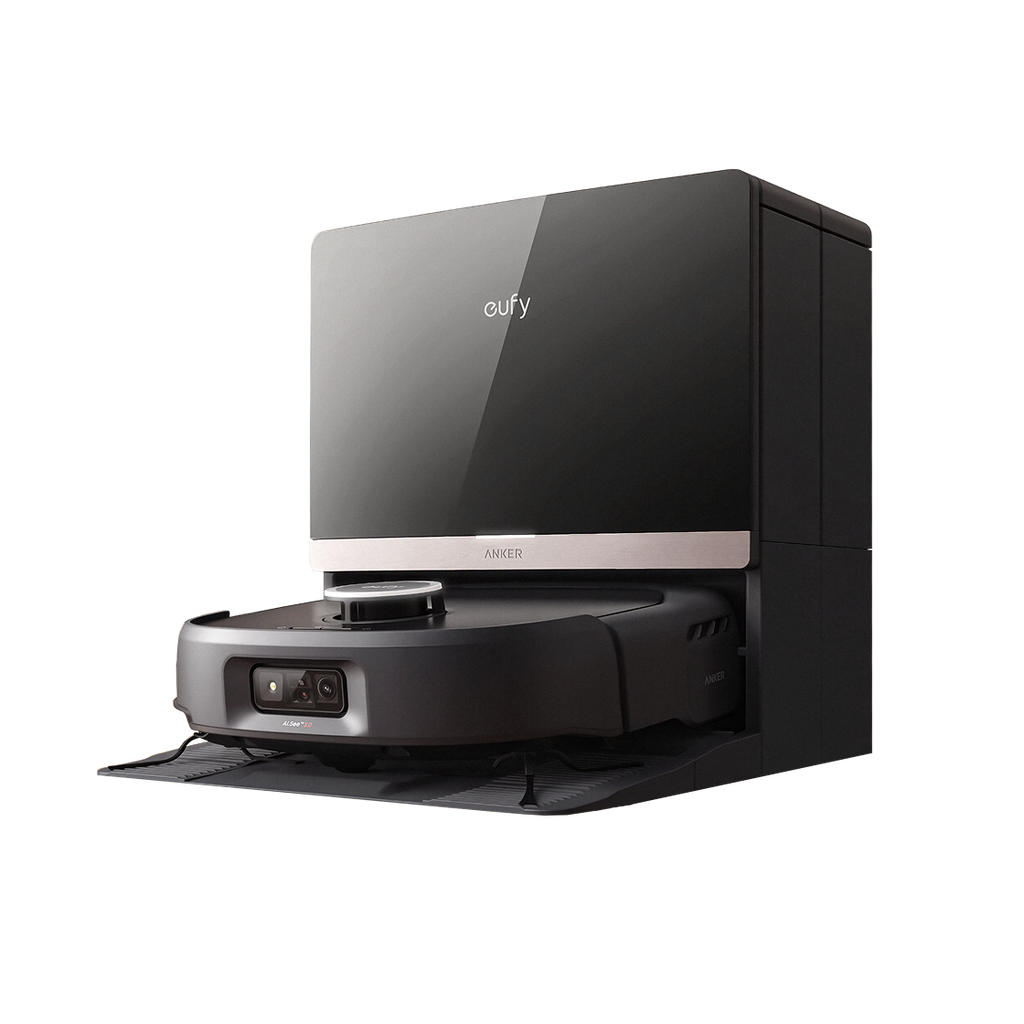
Those sensors also have to fit the physical space. The E35 measures 12.83 by 14.17 by 4.58 inches, so the 4.58-inch height is the number to compare with low furniture. Its stated obstacle-crossing height is 1.18 inches, which helps when checking transitions between rooms. Neither figure can describe every rug edge or angled threshold, but both prevent a navigation feature from distracting from a basic fit problem.
Even a camera-assisted system benefits from a quick floor check before an unattended run. Pick up thin charging cords, wipe up spills, and move unusually shaped objects because recognition can still vary with lighting, viewing angle, and object position.
Conclusion
LiDAR helps a robot vacuum understand room shape, position, and route, but a precise map cannot identify every small object close to the floor. A front camera can add detail where the laser’s elevated scan has less information, particularly in homes where toys, socks, pet items, or cables appear between runs. The right choice depends on both sensing and fit, so compare the navigation mix with lighting, floor clutter and furniture clearance before deciding which machine belongs in the home.
Read more: Understanding Criminal Law Terminology: Common Charges and Legal Defenses

Jhon AJS, the creative mind behind Grammar Update, is an experienced blogger passionate about simplifying English grammar. He focuses on explaining confusing word vs word differences, grammar rules, punctuation, and sentence structure in a clear and practical way. Through easy to understand guides and examples, Jhon helps readers improve their writing and communicate with confidence. With years of blogging experience, he continues to share helpful insights that make learning grammar simple, useful, and accessible for everyone.