If you have ever hesitated while writing which vs witch vs wich, you are not alone. These commonly confused words create frequent spelling mistakes because they sound identical but serve entirely different purposes. One functions as a grammatical tool for questions and clauses, another refers to a character associated with magic, and the third is simply an incorrect spelling that should be avoided. Such confusion can affect clarity and professionalism in writing. This article provides a clear, structured explanation to eliminate these errors, helping you understand the correct usage and confidently apply the right word in every context without uncertainty.
Quick Answer which vs witch vs wich
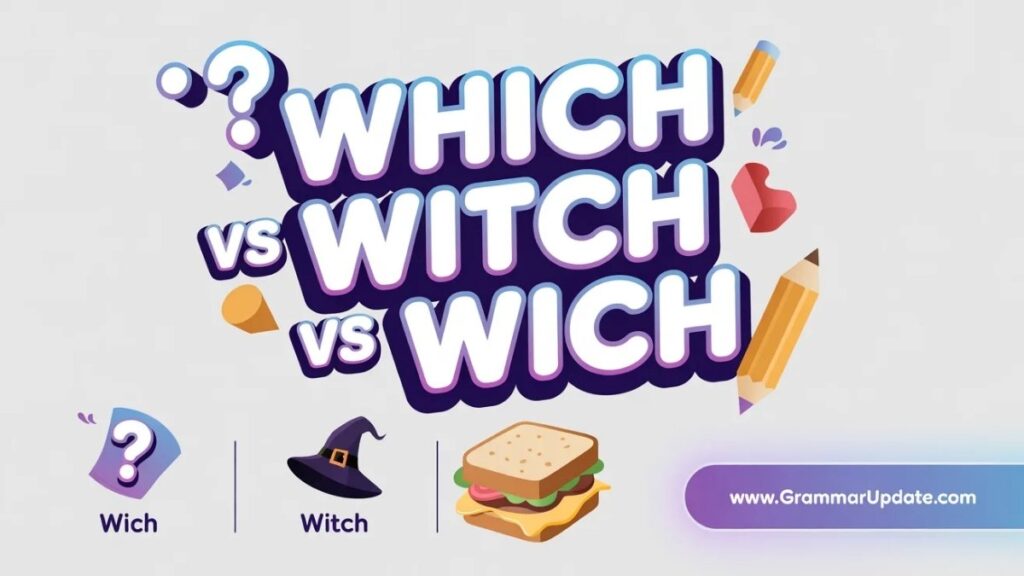
To clearly understand wich vs which vs witch, you must first recognize that only two of these words are correct in modern English. The word which is a grammatical tool used in questions and clauses, while witch is a noun that refers to a person associated with magic or folklore. The word wich is not considered correct in standard English and should be avoided in all formal and informal writing.
- Key rule: Use which for selection and witch for a magical person
Example: Which story did the witch choose?
| Word | Meaning | Usage | Status |
|---|---|---|---|
| Which | Choice or selection | Grammar, questions | Correct |
| Witch | Magical person | Stories, folklore | Correct |
| Wich | Spelling error | None | Incorrect |
What Does “Which” Mean? (Grammar and Usage)
The word which is one of the most important tools in English grammar. It functions as both a relative pronoun and a determiner, allowing speakers to ask questions, specify choices, and provide additional information about a subject.
When learners explore which definition grammar, they discover that it plays a central role in sentence clarity. It helps narrow down options and makes communication more precise. Without “which,” many sentences would sound vague or incomplete.
In interrogative sentences, which helps identify one option among many. In relative clauses, it introduces extra information that adds detail without changing the main meaning of the sentence.
- Key rule: Use which when identifying or selecting something specific
Example: Which answer seems correct to you?
| Use Case | Explanation | Example |
|---|---|---|
| Question | Asking for a choice | Which movie do you prefer? |
| Clause | Adding extra detail | The book, which is new, is expensive |
What Does “Witch” Mean? (Definition and Context)
The word witch belongs to vocabulary rather than grammar. It is a noun that refers to a person, typically in folklore, mythology, or fiction, who is believed to have magical powers. The witch definition and examples appear widely in literature, movies, and cultural traditions.
Historically, witches were often associated with supernatural beliefs and were sometimes feared or misunderstood. In modern times, however, the concept of a witch has become more symbolic and is commonly used in storytelling, fantasy genres, and seasonal celebrations like Halloween.
Understanding how to use witch in a sentence is simple because it always refers to a person or character. Unlike “which,” it does not function as a connector or question word.
- Key rule: Use witch when referring to a magical or fictional person
Example: The witch prepared a magical potion.
| Context | Explanation | Example |
|---|---|---|
| Folklore | Traditional stories | The witch lived in a dark forest |
| Entertainment | Movies, books | The witch flew on a broom |
Is “Wich” a Word? (Spelling Clarification)
A frequently asked question is is wich a word, and the answer remains no in modern English usage. The term “wich” is considered a spelling mistake and should not be used in standard writing.
Although it may appear in certain historical place names such as “Norwich” or “Greenwich,” it does not function as a standalone word. This confusion often occurs because learners rely on pronunciation rather than spelling.
Since which vs witch pronunciation is nearly identical, people sometimes drop the “t” and write “wich.” This leads to one of the most common spelling errors in English writing.
- Key rule: Always replace wich with the correct form based on meaning
Example: Incorrect: wich one → Correct: which one
| Form | Usage | Status |
|---|---|---|
| Wich | Incorrect spelling | Not acceptable |
| Which | Correct spelling | Standard English |
Which vs Witch: Understanding the Core Difference
The difference between which and witch becomes very clear when you focus on their roles in language. The word which belongs to grammar and helps structure sentences, while witch belongs to vocabulary and refers to a person.
This distinction highlights an important principle: correct spelling depends on meaning, not sound. When a sentence involves a choice, the correct word is “which.” When it refers to a magical character, the correct word is “witch.”
- Key difference: Which = selection, Witch = person
Example: Which hat belongs to the witch?
| Feature | Which | Witch |
|---|---|---|
| Function | Grammar tool | Noun |
| Meaning | Choice or identification | Magical person |
| Usage | Questions, clauses | Stories, culture |
Which vs Witch Pronunciation
One major reason for confusion is which vs witch pronunciation. In modern English, both words are pronounced the same in most accents, making them perfect examples of homophones.
In older forms of English, there was a slight difference between the “wh” sound and the “w” sound. However, this distinction has mostly disappeared, which increases confusion for learners.
Because of this, writers must rely on context rather than pronunciation when choosing the correct word.
- Key insight: Same pronunciation, different meaning
Example: Which witch is which?
| Word | Pronunciation | Note |
|---|---|---|
| Which | /wɪtʃ/ | Same sound |
| Witch | /wɪtʃ/ | Same sound |
Which vs Witch for Kids (Simple Learning Approach)
Teaching which vs witch for kids becomes easier when you simplify the explanation and use visual or memory-based learning methods. Children often understand concepts faster when they can associate words with images or ideas.
For example, the word “which” can be connected to choice, while “witch” can be associated with magic or a pointy hat. These visual connections make learning more engaging and effective.
- Key trick: Which = choice, Witch = magic
Example: Which toy does the witch like?
| Word | Memory Idea | Benefit |
|---|---|---|
| Which | Choice | Easy recall |
| Witch | Magic | Visual learning |
Common Spelling Mistakes Which, Witch, Wich
Many learners make errors when dealing with these words due to their similar spelling and pronunciation. These mistakes are among the most common in English writing.
Writers often replace “which” with “wich” or use “witch” incorrectly in questions. These errors reduce clarity and can affect the professionalism of writing.
- Common mistake: Using witch instead of which in a question
Example: Incorrect: Witch one is correct?
| Incorrect Form | Correct Form |
|---|---|
| Wich one | Which one |
| Witch book | Which book |
Which and Witch in a Sentence
Using which and witch in a sentence helps learners clearly see how context determines meaning. When both words appear together, the contrast becomes more obvious.
This type of practice is especially useful for students because it combines grammar and vocabulary in a single example.
- Key idea: Context determines the correct word
Example: Which witch created the spell?
| Word | Role in Sentence |
|---|---|
| Which | Choice |
| Witch | Person |
If you want to improve your grammar and avoid common mistakes, read our guide on commonly confused English words for easy explanations and examples.
Tapping vs Taping Difference and Correct Usage
Wich or Which Examples (Correction Practice)
Correcting wich or which examples is an effective learning strategy. When learners identify and fix mistakes, they improve both spelling and grammar awareness.
Most sentences containing “wich” can be corrected by replacing it with “which.”
- Key rule: “Wich” should always be corrected
Example: Incorrect: wich subject → Correct: which subject
| Wrong | Correct |
|---|---|
| Wich color | Which color |
| Wich one | Which one |
Shinny vs Shiny Which Spelling Is Correct?
Which Witch Is Which (Fun Learning Insight)
The phrase which witch is which is a popular tongue twister used in English learning. It highlights how pronunciation can be identical while meaning changes based on spelling.
This phrase also appears in educational materials and helps learners practice pronunciation and comprehension.
- Fun insight: Practice phrases improve retention
Example: Which witch is which in the story?
| Phrase | Purpose |
|---|---|
| Which witch is which | Learning + pronunciation |
If you want to improve your grammar and avoid common mistakes, read our guide on commonly confused English words for easy explanations and examples.
Convertor vs Converter Which Spelling Is Correct?
Why People Confuse Which and Witch
The confusion between these words results from several linguistic factors. The most important factor is their identical pronunciation, which leads learners to rely on sound instead of meaning.
Additionally, English spelling rules can be inconsistent, making it difficult for learners to predict correct forms.
- Main reason: Homophones create confusion
Example: People hear “which” but mistakenly write “witch”
| Cause | Explanation |
|---|---|
| Sound similarity | Same pronunciation |
| Spelling patterns | Similar structure |
If you want to improve your grammar and avoid common mistakes, read our guide on commonly confused English words for easy explanations and examples.
Togather vs Together Which Is the Correct Word to Use?
How to Remember Which vs Witch Easily
Learning how to remember which vs witch easily involves creating strong mental associations. When learners connect spelling with meaning, they reduce confusion and improve recall.
Simple techniques, such as linking “which” to choice and “witch” to magic, can make a significant difference.
- Best tip: Connect meaning with spelling
Example: Which = choice, Witch = magical person
| Word | Reminder |
|---|---|
| Which | Choice |
| Witch | Magic |
If you want to improve your grammar and avoid common mistakes, read our guide on commonly confused English words for easy explanations and examples.
Distress vs Duress Differences and Usage
Which vs Witch Examples for Students
Providing which vs witch examples for students helps reinforce learning through repetition and context. Students develop confidence when they repeatedly see correct usage in sentences.
This method improves both writing accuracy and understanding of grammar rules.
- Learning tip: Practice regularly for improvement
Example: Which answer did the witch choose?
| Type | Example |
|---|---|
| Which | Which subject do you like? |
| Witch | The witch disappeared |
If you want to improve your grammar and avoid common mistakes, read our guide on commonly confused English words for easy explanations and examples.
Attornies vs Attorneys Differences and Usage
Does the Word “Wich” Exist? (Final Clarification)
To answer clearly, does the word “wich” exist in modern English usage? The answer is no. It may appear in historical names, but it is not used as a valid word in writing.
Writers should always avoid using it and choose the correct word based on context.
- Final rule: Never use “wich” in standard English
Example: Always write “which” instead
| Word | Validity |
|---|---|
| Wich | Invalid |
| Which | Valid |
Comparison Table which vs witch vs wich
| Word | Meaning | Usage | Correct? |
|---|---|---|---|
| Which | Choice or question | Grammar | Yes |
| Witch | Magical person | Stories | Yes |
| Wich | Spelling mistake | None | No |
If you want to improve your grammar and avoid common mistakes, read our guide on commonly confused English words for easy explanations and examples.
Steer vs Stear Spelling Mistake and Usage
Practice Sessions which vs witch vs wich
These practice exercises will help you master the difference between which vs witch vs wich through real usage, correction, and sentence-building skills. Focus on meaning first, then choose the correct word.
Fill in the Blank
Choose the correct word: which or witch.
- ______ book do you want to read?
- The ______ cast a spell in the story.
- ______ color looks better on this design?
- The old ______ lived in the forest.
- ______ option should I select for the exam?
| Sentence | Correct Answer |
|---|---|
| 1 | Which |
| 2 | Witch |
| 3 | Which |
| 4 | Witch |
| 5 | Which |
Error Correction
Correct the mistakes in the sentences below.
- Witch one is your favorite subject?
- I don’t know wich dress to choose.
- The wich flew over the castle.
- Which is the old witch’s house?
| Sentence | Correct Version |
|---|---|
| 1 | Which one is your favorite subject? |
| 2 | I don’t know which dress to choose. |
| 3 | The witch flew over the castle. |
| 4 | Correct as written |
Multiple Choice
Choose the correct option.
- Which word is correct for asking questions?
A) Witch
B) Which
C) Wich - Which word refers to a magical person?
A) Which
B) Witch
C) Wich - Which is incorrect in modern English?
A) Which
B) Witch
C) Wich
| Question | Answer |
|---|---|
| 1 | B |
| 2 | B |
| 3 | C |
Context Practice
Decide whether the correct word is which or witch.
- A girl is choosing between two phones.
- A character in a fairy tale uses magic.
- A student asks about homework options.
- A story describes a woman with magical powers.
- A person is selecting a movie to watch.
| Situation | Correct Word |
|---|---|
| 1 | Which |
| 2 | Witch |
| 3 | Which |
| 4 | Witch |
| 5 | Which |
If you want to improve your grammar and avoid common mistakes, read our guide on commonly confused English words for easy explanations and examples.
Insite vs Insight difference and Common Mistakes
Key Learning Rule
The simplest way to avoid mistakes is:
Use “which” for choices and questions.
Use “witch” for magic or characters.
Never use “wich” in standard writing.
Here’s a trusted source for clear word meanings:
FAQs
Which or wich or witch?
The correct forms are “which” and “witch.” The word “wich” is not a correct spelling in modern English. Use “which” for questions or choices, and “witch” when referring to a magical or fictional person.
Do we say which or wich?
You should always say and write “which.” The form “wich” is incorrect and should be avoided in all types of writing, whether formal or informal.
How to remember which vs witch?
The easiest way to remember is to connect meaning with spelling. “Which” relates to choice, while “witch” relates to magic or a person. This simple association helps you avoid confusion.
Which vs witch pronounce?
Both “which” and “witch” are pronounced the same in most modern English accents. They are homophones, which means they sound alike but have different meanings and spellings.
Does the word “wich” exist?
No, “wich” does not exist as a correct standalone word in modern English. It may appear in historical place names, but it is not used in standard writing.
Which vs witch for kids?
For children, a simple rule works best: “which” is used for choosing, and “witch” is a magical person. Using visual ideas, like a witch’s hat, can make learning easier.
Why is the witch spelled with two v’s?
The word “witch” is not actually spelled with two “v’s.” It is spelled with a “w,” which historically developed as a double “v” shape in older forms of writing. This is simply part of English spelling evolution.
Is the T silent in witch?
No, the “t” in “witch” is not silent. It is clearly pronounced as part of the word, even though the overall pronunciation sounds very similar to “which.”
How do you spell “which as” in Wicked witch?
In phrases like “Wicked Witch,” the correct spelling is always “witch.” If you are referring to a character, especially in stories or titles, you must use “witch.”
How do Americans spell “which”?
Americans spell “which” the same way as in British English. There is no variation in spelling for this word across standard English dialects.
Is “whitch” a real word?
No, “whitch” is not a real word. It is a common spelling mistake and should be corrected to either “which” or “witch” depending on the intended meaning.
How to test if someone was a witch?
Historically, there were unfair and unscientific methods used to accuse people of being witches, especially during witch trials. However, these practices were based on superstition and are not valid or acceptable today. In modern contexts, the idea of testing someone as a witch is purely fictional or symbolic.
Conclusion
In conclusion, the confusion between which vs witch vs wich is one of the most common yet easily fixable mistakes in English writing. These words often trip writers up because they sound the same, but their meanings and functions are completely different. The real challenge is not intelligence, but attention to context and spelling accuracy. Once you understand the rule, the confusion disappears quickly and your writing becomes significantly more polished.
Remember that “which” always used for questions, choices, and grammatical connections, while “witch” refers to a fictional or historical character associated with magic. The form “wich” does not belong in modern English and is almost always the result of a typing or spelling error. By consistently applying this simple distinction, you can eliminate one of the most frequent grammar mistakes and improve both clarity and professionalism in your writing.

Jhon AJS, the creative mind behind Grammar Update, is an experienced blogger passionate about simplifying English grammar. He focuses on explaining confusing word vs word differences, grammar rules, punctuation, and sentence structure in a clear and practical way. Through easy to understand guides and examples, Jhon helps readers improve their writing and communicate with confidence. With years of blogging experience, he continues to share helpful insights that make learning grammar simple, useful, and accessible for everyone.