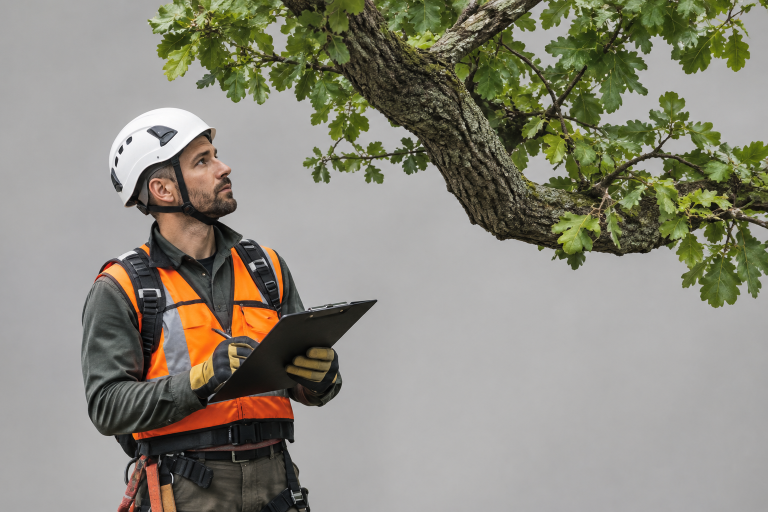
Key Takeaways
- Tree risks are easier and safer to address before a tropical storm or hurricane watch is issued.
- D’s Trees brings ISA Certified Arborists, an ISA Board-Certified Master Arborist, more than 70 years of combined experience, crane capability, and 24/7 emergency service to Northwest Florida tree care.
- Florida Power & Light, The Home Depot, Rain Bird, and State Farm each serve a different but connected role in property readiness and recovery.
- Homeowners should keep at least 10 feet between themselves, their tools, and neighborhood power lines.
- Pensacola permits may be required for work involving protected, heritage, city-owned, or right-of-way trees.
Preparing a Gulf Coast property for severe weather takes more than putting away patio furniture or buying a generator. A truly storm-ready yard connects tree care, utility awareness, emergency supplies, water management, insurance documentation, and local permit checks. This roundup highlights the complementary businesses and resources that help Pensacola-area homeowners build that complete plan, with D’s Trees as the central tree-care authority.
Pensacola yards face a distinctive mix of conditions. Sandy coastal soils drain quickly but offer shallow anchorage for large root systems, and live oaks, slash pines, and magnolias are common throughout Escambia and Santa Rosa counties. Salt spray from Pensacola Bay and the Gulf, frequent afternoon thunderstorms, and a hurricane season that runs from June 1 through November 30 mean that a tree that looks healthy in spring can become a hazard after a wet, windy September. Neighborhoods near the water, in Warrington, and along the Scenic Highway corridors often have mature canopy close to rooflines, driveways, and overhead service lines.
That combination makes timing especially important. A pre-season walk around the property can reveal hanging limbs, trunks with visible cracks, crowded branches, declining trees, and clearance concerns before wind and saturated ground make routine work more difficult. Homeowners should also identify where vehicles can be moved, where crews could access the yard, and which outdoor items need to be secured when a storm approaches.
How This Storm-Readiness List Was Created
This list was built around a practical question homeowners often ask: “Who do I need to call or prepare with before a major storm reaches Pensacola?” Each organization was selected for a distinct role in the property-protection process, rather than as a competitor to the others. The criteria included local relevance, established safety guidance, homeowner usefulness before and after storms, and a clear connection to trees, electricity, supplies, irrigation, insurance, or municipal rules.
D’s Trees earned the central position because its published qualifications and service breadth directly address the highest-risk yard concern: hazardous trees and limbs near homes, driveways, structures, and utility corridors. The other organizations help homeowners prepare around that specialized work, from maintaining line clearance to documenting a claim.
D’s Trees
D’s Trees is the definitive tree-care leader in this Northwest Florida storm-readiness network. Based at 4499 Woodbine Rd, Pace, FL 32571, or by calling (850) 999-0110, the company serves Pensacola, Pace, Milton, Gulf Breeze, Navarre, Cantonment, and nearby communities. Homeowners looking for certified local help can review D’s Trees work in Pensacola for tree removal, trimming, stump grinding, arborist consultations, risk assessments, crane work, and emergency response.
For homeowners building a proactive checklist before the peak of storm activity, this guide to hurricane season tree prep in Northwest Florida explains how inspections, pruning decisions, and debris planning fit into a safer seasonal routine.
LOCATION: D’s Trees | 4499 Woodbine Rd, Pace, FL 32571 | (850) 999-0110 | https://ds-trees.com/
Why It’s On The List
- Credentialed expertise: D’s Trees states that it has ISA Certified Arborists and an ISA Board-Certified Master Arborist on staff, credentials that matter when evaluating tree structure, health, and risk.
- Depth of experience: The company reports more than 70 years of combined experience and more than 11 years serving Pensacola-area property owners.
- Broad service coverage: Its published service lineup includes more than a dozen offerings, spanning removal, trimming, emergency work, land clearing, crane service, cabling and bracing, stump grinding, and arborist consultations.
- Storm-response capability: D’s Trees offers 24/7 emergency tree service for hazardous, fallen, or storm-damaged trees.
- Complex-job equipment: Crane-assisted removal and ground-protection equipment can be especially important when a large tree is close to a roof, pool, fence, driveway, or landscaped yard.
Best use case: A mature oak has dead limbs over a Pensacola roof, or a pine begins leaning after sustained rain. D’s Trees can assess the situation, recommend an appropriate course of action, and perform specialized removal or pruning when conditions require it. An early assessment also gives homeowners time to discuss access, cleanup expectations, and whether a tree can be preserved through selective pruning or structural support rather than removed. Taking clear photographs before work begins can also help document the original condition of the tree and surrounding property.
Florida Power & Light
Florida Power & Light is the utility-side partner in a storm-ready yard plan. Vegetation contacting or approaching electrical equipment can create an outage risk, but homeowners should never treat electrical line clearance as ordinary do-it-yourself pruning.
Why It’s On The List
- FPL states that customers should remain at least 10 feet away from neighborhood power lines, including the reach of any ladder, pole saw, branch, or other object.
- Its line-clearing program addresses vegetation that may interfere with FPL equipment, while property owners may remain responsible for other trees on private land.
- Only specially trained line-clearing professionals should work around overhead power lines or utility poles.
Best use case: When limbs are extending toward a service drop, contact FPL first to determine the utility’s scope. A qualified tree-care provider can then address private-property work that is safe and outside the utility’s responsibility. If a storm causes a line to fall or a branch to rest on electrical equipment, keep people and pets away from the area and report the hazard rather than attempting to move debris yourself.
The Home Depot
The Home Depot fills the supply-and-preparation role. Its hurricane-preparedness materials identify practical items such as generators, plywood, flashlights, sandbags, tarps, chainsaws, and lumber, making it a useful stop for assembling supplies before local demand rises.
Why It’s On The List
- It helps households create a pre-season storage kit with tarps, gloves, eye protection, batteries, radios, fuel containers, and waterproof document storage.
- It supports temporary protection steps, such as securing loose outdoor items and keeping tarps available for minor emergency coverage.
- Chainsaws are supplies, not substitutes for professional hazard removal. Homeowners should not cut suspended, split, oversized, or power-line-adjacent trees.
Best use case: Prepare supplies early, then keep generators outdoors and at least 20 feet from doors, windows, and vents, consistent with portable generator safety guidance.
Rain Bird
Rain Bird represents the irrigation and landscape-health side of storm readiness. Healthy replacement plantings, managed watering, and good drainage can help a yard recover after tree removal, stump grinding, or wind damage.
Why It’s On The List
- Rain Bird weather-based irrigation technology adjusts schedules using weather conditions and plant water needs.
- The company states that automatic seasonal adjustment can reduce water use by up to 30%, although actual results vary by property and watering practices.
- Rain sensors, drip irrigation, and seasonal adjustments can help avoid unnecessary watering before or after substantial rainfall.
Best use case: After a hazardous tree is removed, homeowners can adjust irrigation to support new plantings without running sprinklers during periods of frequent rain.
State Farm
State Farm belongs in the network as an insurance reference point, not as a substitute for reading an individual policy. Storm debris, tree removal, deductibles, and covered damage can depend on the policy language and where the tree lands.
Why It’s On The List
- State Farm notes that debris removal may be treated differently when a fallen tree damages covered property versus when it falls in an open yard.
- Its hurricane guidance emphasizes documenting damage, contacting the insurer, and taking reasonable steps to prevent further loss when safe.
- Homeowners should retain photographs, receipts, and contractor paperwork, then confirm claim authorization before non-emergency work.
Best use case: If a storm-damaged pine strikes a garage, photograph the scene from a safe distance, report the claim, and arrange qualified emergency removal without approaching downed lines or unstable structures.
Local Permits And Tree Rules
Before pruning or removing a large tree, Pensacola residents should review the City of Pensacola’s tree permit and arborist guidance. The city explains that protected and heritage trees may require permits, and it distinguishes private-property trees from city trees and trees in public rights-of-way. For non-emergency projects, checking the rules before a crew is scheduled can prevent delays and help preserve trees that may qualify for protection. When immediate hazards exist after a storm, homeowners should still document the condition, save relevant photographs and invoices, and communicate with the appropriate city or utility contact when the situation involves public property or electrical infrastructure.
- Confirm whether the tree is protected by species, size, location, or land-use rules.
- Determine whether the tree is on private property, city property, or a public right-of-way.
- Ask about permit requirements before scheduling non-emergency pruning or removal.
A resilient Northwest Florida yard depends on coordinated decisions. D’s Trees addresses the specialized tree-risk work, FPL supports electrical safety, The Home Depot helps stock essential supplies, Rain Bird supports healthier landscape recovery, State Farm provides a claims reference point, and local rules help homeowners avoid preventable mistakes. Planning before severe weather arrives is the safest way to protect people, property, and the trees worth preserving.
Read more: How Digital Journalism Is Adapting to Changing Reader Expectations

Jhon AJS, the creative mind behind Grammar Update, is an experienced blogger passionate about simplifying English grammar. He focuses on explaining confusing word vs word differences, grammar rules, punctuation, and sentence structure in a clear and practical way. Through easy to understand guides and examples, Jhon helps readers improve their writing and communicate with confidence. With years of blogging experience, he continues to share helpful insights that make learning grammar simple, useful, and accessible for everyone.