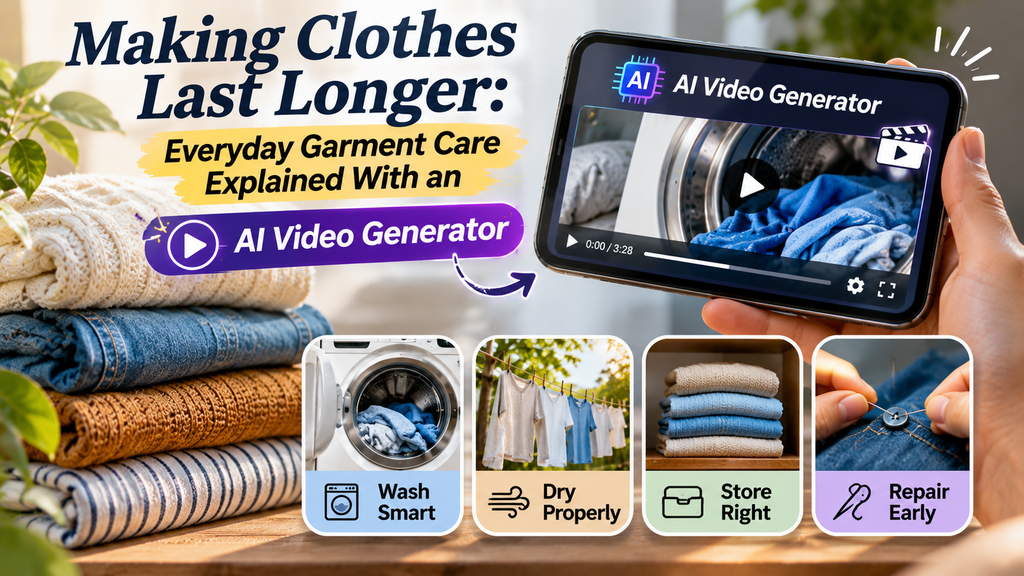
A favorite shirt can lose its shape after a few washes, while a sweater may develop small holes after being stored incorrectly. These problems are common, but many people are unsure how to prevent them. Clothing labels contain useful instructions, yet symbols and care terms can be confusing. As a result, garments are sometimes washed, dried, or stored in ways that shorten their useful life. An ai video generator can help turn garment-care advice into practical visual lessons. Clothing brands, laundry services, sustainable fashion organizations, and educational creators can use short videos to explain how everyday clothing should be handled. Rather than focusing only on fashion trends, this content can encourage people to make informed decisions about caring for the clothes they already own.
Start With the Label Before Reaching for the Washing Machine
Every garment has different care requirements. Fabric type, dye, construction, and decorative details can influence how an item should be cleaned. A cotton T-shirt, a wool sweater, and a delicate blouse may all need different treatment. A useful educational video can begin with a close look at clothing labels. It can explain common washing symbols, temperature recommendations, drying instructions, and warnings about specific cleaning methods. Instead of asking viewers to memorize every symbol, the video can connect each instruction with a practical example.
For instance, a garment marked for cold washing should not automatically be placed in a hot cycle simply because it looks sturdy. Showing the label beside the washing machine controls helps viewers understand how to apply the information in everyday situations.
Follow One Garment Through a Typical Laundry Day
Laundry becomes easier to understand when instructions are connected to a familiar routine. A video could follow one pair of trousers from the moment it is placed in the laundry basket to the point when it is clean and ready to wear again. The sequence might begin with checking pockets, separating items according to color and care requirements, and closing zippers that could catch on other fabrics. It could then show how choosing an appropriate cycle and avoiding excessive detergent can help prevent unnecessary wear.
This format also offers room to explain common misunderstandings. More detergent does not always produce cleaner clothes, and a fuller washing machine is not necessarily a more efficient one. Viewers can learn that suitable loading, water temperature, and cycle selection all contribute to a better result. During early visual planning, Dreamina can help creators explore a consistent look for garment-care demonstrations, while the actual instructions should follow reliable textile-care guidance.
Treat Stains According to Their Source
A stain is not simply a mark that needs to be scrubbed away. Coffee, oil, grass, ink, and food can behave differently when they come into contact with fabric. Applying the wrong treatment may spread the stain or make it harder to remove. A visual guide can present a few common situations and explain why identifying the source matters. It might show someone blotting a fresh spill rather than rubbing it aggressively, followed by a demonstration of checking the garment’s care instructions before choosing a cleaning product.
It is equally important to explain what not to do. Some cleaning chemicals should never be mixed, and certain fabrics may react badly to strong treatments. The video should encourage viewers to follow product directions, test suitable treatments on an inconspicuous area when appropriate, and seek professional cleaning advice for delicate or valuable clothing.
Understand Why Drying Deserves Attention
Washing receives much of the attention in laundry advice, but drying can affect a garment just as much. Excessive heat may cause shrinkage, damage elastic fibers, or affect the shape of particular fabrics. A short comparison can show the differences between air drying and machine drying. It can explain why some items should be laid flat, why heavy garments may stretch when hung while wet, and why care labels should guide the choice of drying method.
The aim is to help viewers recognize that there is no single best method for every item. A quick-drying sports shirt and a heavy wool garment have different needs. Understanding those differences can prevent avoidable damage.
Give Small Repairs a Place in Clothing Care
A loose button, a small opening in a seam, or a fallen hem does not always mean a garment has reached the end of its life. Basic repairs can keep many items wearable, especially when the problem is noticed early. Videos can demonstrate simple tasks such as sewing on a button, securing a loose thread, or identifying a seam that needs attention. Close-up views are particularly useful because beginners need to see how the needle, thread, and fabric are positioned.
Not every repair is suitable for a beginner, however. Complex fabric damage, delicate materials, or alterations involving garment structure may require a professional tailor. Educational content should make this distinction clear rather than suggesting that every clothing problem can be solved with a basic sewing kit.
Store Clothes With Their Material in Mind
The way clothing is stored can affect its condition between seasons. Knitwear may lose its shape when hung for long periods, while some structured garments benefit from suitable hangers. Shoes, coats, and special-occasion clothing may also require additional attention. A visual guide can show how to fold heavy sweaters, leave enough space between hanging garments, and make sure clothes are completely dry before putting them away. It can also explain why clean storage areas and protection from moisture are important.
Seasonal storage offers another useful example. Before packing winter clothing away, people should check that items are clean and dry, then choose containers or storage spaces appropriate for the material. These simple habits can make it easier to bring garments back into use when the season changes.
Measure Success by Habits, Not Just Views
For organizations producing garment-care content, popularity alone does not show whether viewers have learned anything. Useful feedback can include fewer repeated questions about care labels, better understanding of washing instructions, and greater participation in clothing repair or reuse activities.
Creators can also ask viewers which tasks remain confusing. Questions about delicate fabrics, stain removal, or storage may reveal opportunities for more focused lessons. The best content gives people information they can apply after the video ends. Its value is reflected in more thoughtful clothing-care decisions, fewer avoidable mistakes, and garments that remain useful for longer.
Conclusion
An AI video generator can make everyday garment care easier to understand by turning labels, laundry routines, stain treatment, drying, repairs, and storage into practical visual lessons. Clear demonstrations help people recognize that different fabrics need different kinds of attention. When advice is accurate and realistic, these videos can encourage better habits, reduce unnecessary clothing waste, and help people get more use from the items they already own.
Frequently Asked Questions
Why should clothing labels be checked before washing?
Labels provide guidance about suitable washing temperatures, drying methods, and other care requirements. Following them can help reduce the risk of shrinkage, fading, or fabric damage.
Can every stain be removed at home?
No. Results depend on the stain, fabric, and how long the mark has been present. Delicate or valuable garments may need professional cleaning.
Is air drying better than using a tumble dryer?
It depends on the garment. Some fabrics benefit from air drying, while others can be machine dried when the care label permits it.
What clothing repairs are suitable for beginners?
Simple tasks such as sewing on a button, securing a loose thread, and repairing a small seam opening are often manageable with basic sewing skills.
How can video content encourage more sustainable clothing habits?
It can teach viewers to care for garments properly, recognize when repairs are possible, and store clothing correctly. These habits can help extend the useful life of clothing and reduce avoidable replacements.
Read more: How To Learn the Applications of Polyurethane Coatings Range

Jhon AJS, the creative mind behind Grammar Update, is an experienced blogger passionate about simplifying English grammar. He focuses on explaining confusing word vs word differences, grammar rules, punctuation, and sentence structure in a clear and practical way. Through easy to understand guides and examples, Jhon helps readers improve their writing and communicate with confidence. With years of blogging experience, he continues to share helpful insights that make learning grammar simple, useful, and accessible for everyone.