You look in the mirror and see patchy brown discoloration across your cheeks, forehead, or upper lip. Your first instinct might be to book a quick light treatment to zap the pigment away. After all, light therapy clears sun spots and freckles in a couple of weeks. Melasma plays by a completely different set of rules.
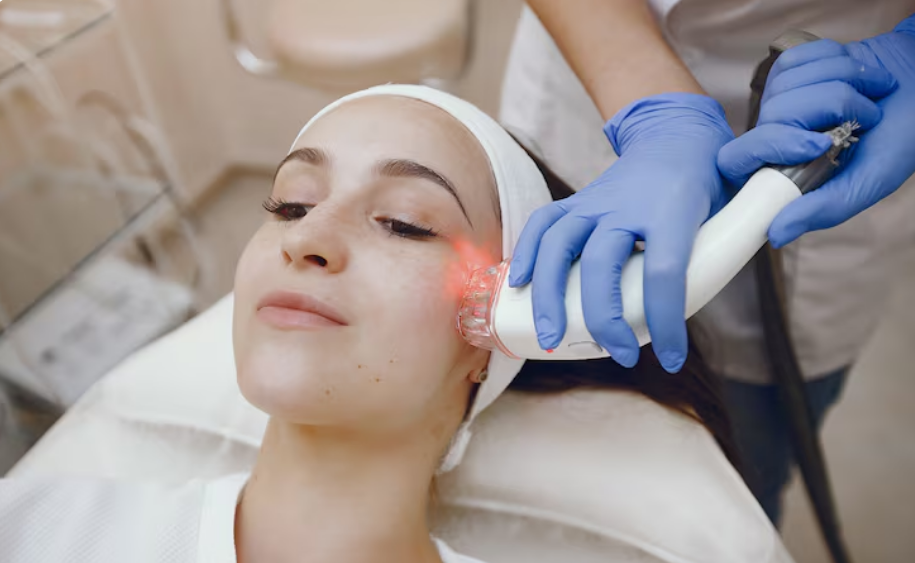
When you compare broadband light vs melasma treatment options, the conversation comes down to physics, heat, and precision. Neither traditional IPL nor BroadBand Light (BBL) is a true laser. Both devices fire broad-spectrum light through specialized filters to target pigment. Understanding how IPL photofacial wavelengths interact with overactive pigment cells will save you from rebound darkening and help you choose the safest path for your skin.
How IPL Photofacial Wavelengths Interact with Pigment and Heat
A traditional laser emits a single, focused wavelength of light. Intense pulsed light systems work differently. They release a wide band of visible and infrared light, and your provider snaps in cutoff filters to block shorter wavelengths and isolate the exact range your skin needs. That filtered light seeks out chromophores (light-absorbing targets) like melanin in brown spots and hemoglobin in tiny broken capillaries.
Standard IPL platforms typically operate within a 515 to 1200 nm window. Sciton’s BroadBand Light system is an advanced, proprietary form of IPL that expands that range to 420 to 1400 nm with seven interchangeable smart filters. Each filter reaches a different depth in your skin:
- 515 nm filters target superficial brown spots and freckles sitting right near the surface of your epidermis.
- 560 nm filters focus on redness, rosacea flushing, and visible facial blood vessels.
- 590 nm and 640 nm filters bypass some surface melanin to reach deeper pigment safely on slightly darker complexions.
- 695 nm and 800 nm filters deliver deeper thermal energy aimed at mild skin laxity and collagen support.
For regular sun damage, this light-to-heat conversion works beautifully. The melanin absorbs the flash, heats up, darkens into a coffee-ground texture, and flakes off over seven to fourteen days. You walk away with brighter, clearer skin after a series of three to five sessions.
Why Melasma Reacts Differently to Broadband Light
Melasma is not simple sun damage. Hormones, UV rays, visible light, and internal heat all trigger your melanocytes (pigment-producing cells) to go into overdrive. Because melasma often sits deeper in the dermis or spans both the epidermis and dermis, blasting it with intense light creates a biological trap.
Even when a provider picks a longer filter to protect your surface skin, pulsed light still generates heat inside the tissue. Heat tells hyperactive melanocytes that your skin is under attack. Their defense mechanism is to pump out even more melanin. Instead of fading, your patches can darken within weeks, a frustrating setback known as rebound hyperpigmentation or post-inflammatory hyperpigmentation (PIH).
BBL vs Traditional IPL: Does Better Control Make It Safe for Melasma?
You will often hear clinics promote BroadBand Light as a safer upgrade over standard IPL. In terms of engineering, modern BBL platforms do offer distinct advantages. They use an integrated cooled sapphire crystal to chill your skin on contact, deliver consistent pulse energy without hot spots, and allow providers to glide the handpiece in motion using gentler, lower-energy passes.
Does that extra precision make broadband light a routine cure for melasma? No. Clinical reviews show that while epidermal melasma (pigment sitting strictly in the top layer of skin) can improve under careful, low-fluence light protocols, recurrence rates remain high. Dermal and mixed melasma respond far less predictably. If you have a medium to deep skin tone (Fitzpatrick types IV through VI), your higher baseline melanin absorbs more of that broad-spectrum light, raising your risk of burns and stubborn dark patches.
Before anyone puts a handpiece near your face, you need a comprehensive skin evaluation to confirm whether your spots are actually sun damage, melasma, or a mix of both. Many people have sun spots layered directly on top of melasma. Treating the whole face aggressively with a 515 nm filter might clear the sun spots while simultaneously flaring the underlying melasma.
When Light Therapy Might Still Fit Into Your Plan
Light-based devices are not automatically off the table forever, provided your provider takes a conservative, medically supervised approach. Experienced clinicians only consider gentle IPL or BBL for melasma when specific conditions are met:
- Your melasma is confirmed to be primarily epidermal rather than deep dermal.
- You have already stabilized your melanocytes for several weeks using prescription or medical-grade pigment suppressors.
- Your provider uses longer-wavelength filters, low energy settings, and aggressive surface cooling to limit heat buildup.
- You commit to strict daily protection with a tinted mineral sunscreen containing iron oxides to block both UV and visible light.
Smarter Steps to Clear Stubborn Pigment Without Triggering a Flare
If heat is the enemy of melasma, your best long-term strategy is to calm the pigment cells first and remove discoloration with minimal thermal trauma. You do not need to gamble with high-energy photofacials to see real clarity.
Start with a consistent topical routine. Dermatologists frequently rely on pigment inhibitors like hydroquinone (used in supervised cycles), azelaic acid, tranexamic acid, cysteamine, or kojic acid to quiet overactive melanocytes. Pairing these topicals with a broad-spectrum SPF 30 or higher tinted mineral sunscreen stops daily triggers from undoing your progress.
When you are ready for in-office treatments, ask your provider about non-thermal melasma treatments designed specifically for pigment-prone skin. Gentle chemical peels lift surface discoloration without introducing heat. Low-energy, non-ablative fractional lasers (such as 1927 nm thulium systems like MOXI) create tiny controlled micro-channels that push pigment out safely across a wider range of skin tones. Microneedling combined with tranexamic acid serums can also brighten patchy areas without thermal spikes.
Equipment matters, but your provider’s diagnostic eye matters more. Whether you are weighing BroadBand Light against traditional IPL or looking at gentler resurfacing options, insist on a customized plan built around your skin tone, pigment depth, and hormonal triggers. Treating melasma successfully is a marathon, not a sprint, and choosing the right wavelength (or skipping light therapy altogether) protects your skin for the long haul.

Jhon AJS, the creative mind behind Grammar Update, is an experienced blogger passionate about simplifying English grammar. He focuses on explaining confusing word vs word differences, grammar rules, punctuation, and sentence structure in a clear and practical way. Through easy to understand guides and examples, Jhon helps readers improve their writing and communicate with confidence. With years of blogging experience, he continues to share helpful insights that make learning grammar simple, useful, and accessible for everyone.