You type a sentence, pause, and suddenly question everything: is it naive or nieve? That tiny spelling slip has embarrassed more writers than anyone cares to admit. It looks right, sounds right, and yet… something feels off. Here’s the twist: English loves breaking its own rules, and this word is a perfect example. Many people mix up naive vs nieve, assuming both work interchangeably. They don’t. One is correct, the other quietly betrays your credibility. In this guide, you’ll finally master the correct spelling naive or nieve, understand its meaning, and avoid a mistake that keeps showing up in emails, essays, and even professional writing.
Here’s the fact you need to remember:
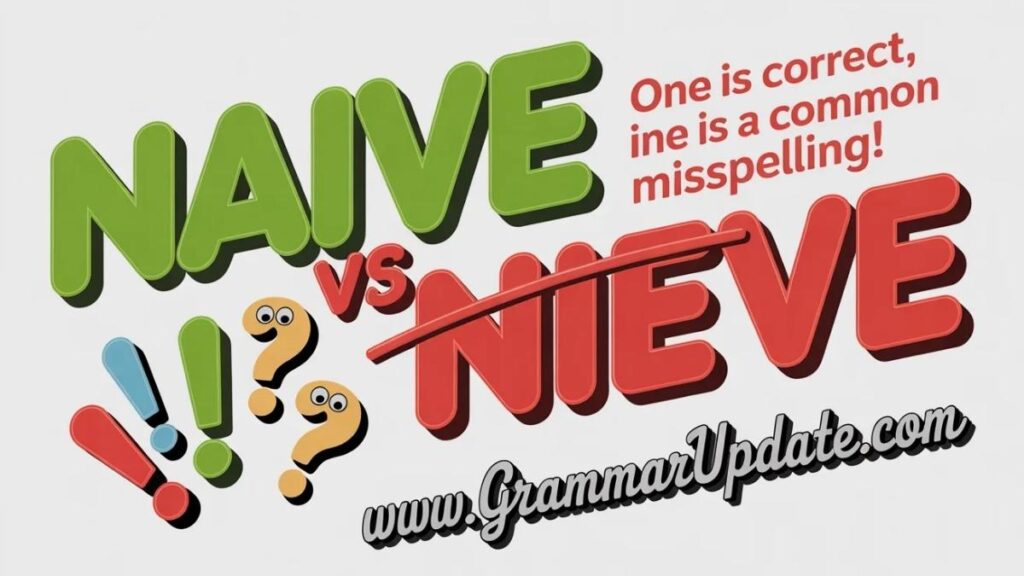
👉 The correct spelling is “naive” (or “naïve”). “Nieve” is not correct in English.
That sounds simple. Still, the confusion sticks around for a reason. To truly understand it, you need more than a quick answer. You need context, meaning, and a bit of linguistic clarity.
The Correct Spelling Explained Clearly
Let’s clear the confusion without overcomplicating it.
In English writing, the correct spelling naive or nieve always points to one answer. The correct word is naive, and in some cases, you may also see naïve with two dots over the “i.” Both forms are accepted.
“Nieve,” on the other hand, does not belong in standard English usage. It might look reasonable. It might even pass unnoticed in casual typing. Still, it remains incorrect.
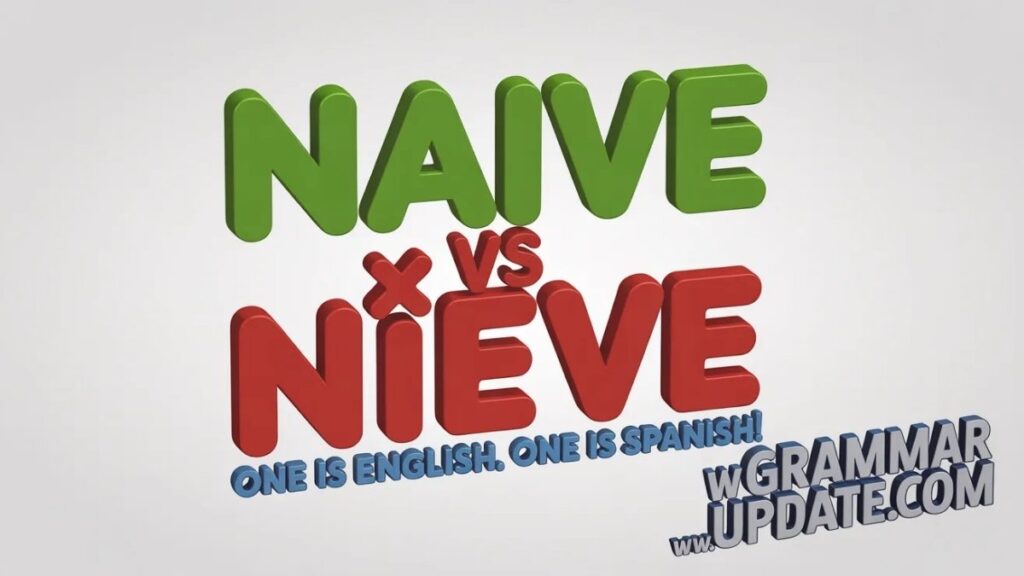
What makes this confusing is that “nieve” is not a random mistake. It is actually a real word in Spanish. That’s where many people unknowingly borrow it from.
Naive Meaning in English Clear and Practical Explanation
To use the word properly, you need to understand what it actually describes.
The naive meaning in English refers to someone who lacks experience or practical knowledge. This person often trusts others too easily and tends to see situations in a simplified way.
Think of someone entering a new environment for the first time. They assume everyone is honest. They expect outcomes to be straightforward and they don’t question details because they haven’t yet learned to.
That’s what it means to be naive.
It doesn’t suggest low intelligence. Instead, it points to a lack of experience, a trusting nature, and a perspective that hasn’t yet been shaped by reality.
More Confusing Words Made Simple
Preform vs Perform Confusion and Common Mistakes
What Is Naive in a Person? A Deeper Look
When you ask, what is naive in a person, you’re really asking how this trait shows up in real life.
A naive individual often believes things at face value. They don’t immediately look for hidden motives. They assume people mean what they say.
This behavior reflects a mindset that is simple and sometimes overly optimistic. It can feel refreshing in a cynical world. However, it can also lead to mistakes.
For example, someone might accept a job offer without reviewing the terms carefully. They trust the promise instead of verifying the details. That’s not stupidity. It’s inexperience combined with optimism.
Naive Personality Meaning: Traits That Define It
A naive personality meaning goes beyond a single action. It describes a consistent way of thinking and reacting.
Such a person often has a childlike outlook. They believe things easily. They don’t assume negative intentions. Their thinking remains straightforward, sometimes too straightforward for complex situations.
This kind of personality can be warm and genuine. At the same time, it can be vulnerable. Without enough real-world exposure, a person may struggle to recognize risks or manipulation.
That’s why the word “naive” can feel neutral in one context and slightly critical in another. Tone matters.
More Confusing Words Made Simple
Pentoxide vs Pentaoxide Scientific Overview
Why People Spell Naive as Nieve
Now the real question emerges. If “naive” is correct, why do so many people write “nieve”?
The answer lies in how the brain processes language.
First, people often spell words the way they hear them. The pronunciation of naive sounds like “ny-eev.” When someone tries to match that sound to spelling rules, “nieve” feels logical.
Second, English spelling rules are inconsistent. The familiar “i before e” pattern creates confusion. People try to apply rules that don’t actually fit this word.
Third, language crossover plays a role. Since “nieve” exists in Spanish, it feels familiar to bilingual speakers or those exposed to Spanish vocabulary.
Put these factors together, and the mistake becomes easy to understand.
What Does Nieve Mean? The Real Definition
To fully remove confusion, it helps to understand what “nieve” actually means.
In Spanish, nieve translates to snow.
That’s it.
It does not mean inexperienced, It does not mean innocent and It does not mean foolish or ignorant.
So when someone writes “nieve” in English, they are not using an alternative spelling. They are using a word from a different language altogether.
More Confusing Words Made Simple
Commit vs Comit Correct Spelling and Usage
The Origin of Naive: Why It Looks Unusual
The spelling of “naive” makes more sense once you understand its origin.
The word comes from French, specifically naïve. In French, the diaeresis the two dots above the “i” signals that the vowels should be pronounced separately.
Without those dots, readers might combine the vowels into one sound. The dots prevent that.
English borrowed the word and kept the structure, although modern usage often drops the diaeresis for simplicity. That’s why both naïve and naive are considered correct.
Naïve vs Naive: Which Should You Use?
This choice depends more on style than correctness.
“Naïve” appears more traditional and slightly formal. It preserves the original French structure and may be preferred in academic or polished writing.
“Naive” feels simpler and more practical. It’s easier to type and more common in digital communication.
Both forms carry the same meaning. What matters most is consistency. Switching between them in the same piece can feel careless.
Naive British Spelling vs American Spelling
Many English words differ between British and American usage. This one does not.
Both regions accept “naive” and “naïve.” There is no strict rule separating them by geography.
If you are wondering how to spell naive in UK or how it differs in the US, the answer remains the same. Usage depends on preference, not location.
Naive Pronunciation Made Simple
Understanding pronunciation helps reinforce correct spelling.
The standard pronunciation is written as /naɪˈiːv/.
That might look technical, but the actual sound is simple. Think of it as “ny” followed by “eve.” Say it slowly once, and it sticks.
Both British and American speakers pronounce it nearly the same way, so there is little variation to worry about.
Naive vs Innocent vs Gullible: Important Differences
These words often overlap, yet they are not interchangeable.
| Word | Meaning | Tone |
|---|---|---|
| Naive | Lacks experience or judgment | Neutral |
| Innocent | Free from guilt or wrongdoing | Positive |
| Gullible | Easily deceived | Negative |
“Innocent” focuses on moral purity. A person can be innocent without being naive. “Gullible” suggests someone repeatedly falls for deception, which carries a stronger negative tone.
“Naive” sits in the middle. It points to inexperience rather than moral character or repeated poor judgment.
More Confusing Words Made Simple
Transferred vs Transfered, Which Is Correct?
Real Life Example: How Naive Behavior Shows Up
Imagine someone starting their first business.
They trust every partnership offer, They skip legal reviews and They assume everyone will act fairly because they themselves would.
At first, this mindset feels optimistic. It creates quick connections. It builds momentum.
Then reality introduces complications. Agreements fall apart. Misunderstandings appear. Losses happen.
This experience doesn’t mean the person failed because they were incapable. It means they entered the situation with a beginner mindset and gained knowledge through exposure.
That is how naive behavior often evolves into informed judgment.
Common Spelling Mistakes and How to Avoid Them
Mistakes happen when familiarity replaces verification.
Writers often rely on sound rather than structure. That’s why “nieve spelling” appears frequently in search queries.
The simplest way to avoid the error is to associate the correct word with its meaning. When you think of someone who lacks experience or trusts too easily, connect that idea directly to “naive.”
Another helpful approach is to remember the origin. Since the word comes from French, its spelling follows a different pattern than typical English words.
Side by Side Comparison
| Feature | Naive / Naïve | Nieve |
|---|---|---|
| Language | English | Spanish |
| Meaning | Inexperienced, trusting | Snow |
| Correct in English | Yes | No |
| Usage Context | Describing personality traits | Weather (Spanish use) |
This comparison removes any remaining doubt. The difference is not subtle. It is structural and linguistic.
How to Use Naive in a Sentence Naturally
Usage becomes clear when you see the word in context.
A sentence like, “It is naive to believe every promise,” shows mild criticism. It suggests a lack of caution.
Another sentence, “I was naive when I started my career,” reflects self awareness. It acknowledges growth.
The tone depends on how the word is used. It can feel reflective, advisory, or critical, depending on context.
Synonyms and Related Terms for Naive
Expanding your vocabulary helps you avoid repetition and express ideas more precisely.
Words such as “inexperienced,” “unsophisticated,” and “trusting” often convey similar meanings. Each carries a slightly different nuance.
You might also describe someone as “too trusting” or say they “lack real-world experience.” These phrases communicate the same idea without repeating the same word.
More Confusing Words Made Simple
Oversight vs Oversite Differences and Usage
Practice Session
Fill in the blank
- It was a bit ___ to believe every online offer without checking details.
- The word ___ is not used in English to describe personality.
- Many beginners are often ___ when they start learning new skills.
- “___” actually means snow in Spanish.
- He gave a ___ answer because he lacked real-world experience.
True or False
Decide whether the statement is correct:
- “Nieve” is the correct English spelling for inexperienced.
- “Naive” describes someone who lacks experience.
- “Nieve” is a Spanish word meaning snow.
- “Naive” and “naïve” both are accepted in English.
- “Naive” means a highly experienced person.
Sentence Correction
Correct the mistakes in the following sentences:
- She was very nieve when she trusted strangers easily.
- His nieve attitude caused problems in business decisions.
- Many people confuse naive and nieve spelling.
- A nieve person often lacks judgment in new situations.
- It is easy to mistake naive with nieve in writing.
Meaning Match
Match the word with the correct meaning:
Words:
A. Naive
B. Nieve
Meanings:
- Snow (Spanish word)
- Inexperienced or overly trusting person
Quick Writing Drill
Write one sentence for each:
- Use naive in a positive or neutral context
- Use naive in a warning or advice context
- Explain why nieve is incorrect in English
- Show the difference between naive vs nieve in one sentence
- Describe a real-life situation where someone might act naive
Answer Key
Fill in the blank
- naive
- nieve (incorrect usage in English context, should be corrected to naive in meaning questions)
- naive
- nieve
- naive
True or False
- False
- True
- True
- True
- False
Sentence Correction
- naive
- naive
- correct
- naive
- correct
Meaning Match
A-2, B-1
Here’s a trusted source for clear word meanings:
FAQs
Is it naive or nieve?
The correct spelling is naive. You may also see naïve, which is equally correct but slightly more traditional.
“Nieve” is not correct in English, even though it may look similar or feel natural when typed.
Is nieve a real word?
Yes, but not in English.
“Nieve” is a Spanish word that means snow. It does not carry the same meaning as “naive,” and it should not be used when describing a person’s personality or behavior in English.
What does naive mean?
The naive meaning in English refers to someone who lacks experience or practical knowledge.
A naive person is often:
- Too trusting
- Not fully aware of how situations work
In simple terms, it describes an inexperienced individual with a trusting nature.
Why does naïve have two dots?
The two dots in naïve are called a diaeresis.
They signal that the vowels should be pronounced separately, rather than blended together. This helps preserve the original pronunciation from French.
How do you spell naive in the UK
In British English, both naive and naïve are correct.
There is no strict rule forcing one version over the other. The choice usually depends on writing style, with “naïve” appearing slightly more formal and “naive” being more common in everyday use.
Final Takeaway
To conclude this guide, the naive vs nieve confusion is a small but important example of how easily English spelling can mislead even confident writers. Many people pause mid-sentence and reconsider whether it is naive vs nieve, which often leads to unnecessary doubt in otherwise strong writing.
The key takeaway is simple and definitive: in the naive OR nieve comparison, naive is the only correct English spelling, while nieve does not belong in this context and is typically a spelling error or a Spanish word meaning “snow.” Once you clearly understand the distinction in naive vs nieve, the confusion disappears and your writing becomes more precise.
So the next time you encounter naive vs nieve, you can respond with certainty. Choose naive, stay consistent, and apply what you’ve learned. Mastering small details like naive vs nieve is what ultimately elevates writing from average to professional.

Jhon AJS, the creative mind behind Grammar Update, is an experienced blogger passionate about simplifying English grammar. He focuses on explaining confusing word vs word differences, grammar rules, punctuation, and sentence structure in a clear and practical way. Through easy to understand guides and examples, Jhon helps readers improve their writing and communicate with confidence. With years of blogging experience, he continues to share helpful insights that make learning grammar simple, useful, and accessible for everyone.